
Comparison be quiet! Straight Power 12 BN337 vs be quiet! Straight Power 11 BN284
Add to comparison | 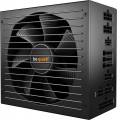 | 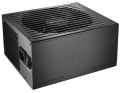 |
|---|---|---|
| be quiet! Straight Power 12 BN337 | be quiet! Straight Power 11 BN284 | |
from $196.99 | from $454.00 | |
| User reviews | ||
| TOP sellers | ||
| Power | 850 W | 850 W |
| Form factor | ATX | ATX |
Specs | ||
| PFC | active | active |
| Efficiency | 93 % | 93 % |
| Cooling system | active | active |
| Fan size | 135 mm | 135 mm |
| Fan bearing | hydrodynamic | hydrodynamic |
| Certification | 80+ Platinum | 80+ Gold |
| ATX12V version | 3 | 2.4 |
| EPS12V version | 2.92 | 2.92 |
Power connectors | ||
| MB/CPU power supply | 24+8+8(4+4) pin | 24+8+8(4+4) pin |
| SATA | 9 | 11 |
| MOLEX | 2 | 4 |
| PCIe 8pin (6+2) | 4 | 4 |
| PCIe 16pin | 1 pcs | |
| Cable system | modular | modular |
| Braided wires |  |  |
Cable length | ||
| MB | 600 mm | 600 mm |
| CPU | 700 mm | 700 mm |
| SATA | 550 mm | 1000 mm |
| MOLEX | 850 mm | |
| PCIe | 600 mm | 600 mm |
Max. power | ||
| +3.3V | 25 А | 25 А |
| +5V | 25 А | 25 А |
| +12V1 | 70.8 А | 21 А |
| +12V2 | 21 А | |
| +12V3 | 26 А | |
| +12V4 | 26 А | |
| -12V | 0.3 А | 0.5 А |
| +5Vsb | 3 А | 3 А |
| +12V | 850 W | 849 W |
| +3.3V +5V | 150 W | 150 W |
General | ||
| Over voltage protection (OVP) | | |
| Over power protection (OPP) | | |
| Short circuit protection (SCP) | | |
| Protection | OTP, OCP, UVP, SIP | OTP, OCP, SIP, UVP |
| Noise level | 22 dB | 25 dB |
| Manufacturer's warranty | 10 years | 5 years |
| Dimensions (HxWxD) | 86x150x160 mm | 86x150x170 mm |
| Weight | 1.81 kg | |
| Added to E-Catalog | july 2023 | may 2018 |


Compare be quiet! Straight Power 12 and Straight Power 11
You may be interested in
My comparisons
be quiet! Straight Power 12 often compared


be quiet! Straight Power 11 often compared

Glossary
Certification
The presence or absence of an 80+ certificate for the power supply. This certificate indicates high energy efficiency: to obtain it, the efficiency (see above) must be at least 80%, and in different modes (20%, 50% and 100% of the maximum load). There are several degrees of 80+:
— 80+. The original version of the certificate, assuming an efficiency of at least 82% (at least 85% for 50% load).
— 80+ White. The second name of the original 80+ certificate (see above).
— 80+ Bronze — efficiency not less than 85% (for half load — 88%).
— 80+ Silver — respectively 87% (90% for half load).
— 80+ Gold — 89% (92% for half load)
— 80+ Platinum — 90% (94% for half load).
— 80+ Titanium — 94% (96% for half load).
The power factor (see "PFC Type") must be at least 0.9 for the lower levels and at least 0.95 for the Platinum level. Also note that for redundant power used in server systems, the efficiency requirements are somewhat lower.
— 80+. The original version of the certificate, assuming an efficiency of at least 82% (at least 85% for 50% load).
— 80+ White. The second name of the original 80+ certificate (see above).
— 80+ Bronze — efficiency not less than 85% (for half load — 88%).
— 80+ Silver — respectively 87% (90% for half load).
— 80+ Gold — 89% (92% for half load)
— 80+ Platinum — 90% (94% for half load).
— 80+ Titanium — 94% (96% for half load).
The power factor (see "PFC Type") must be at least 0.9 for the lower levels and at least 0.95 for the Platinum level. Also note that for redundant power used in server systems, the efficiency requirements are somewhat lower.
ATX12V version
A standard for power supplies that supplements the ATX specifications regarding power supply along the 12 V line. Introduced into use since the time of the Intel Pentium 4 processor. In the first series of the standard, the +5 V line was mainly used; from version 2.0, the +12 V line was introduced to fully power the components computer. Also in the second generation, a 24-pin power connector appeared, used in most modern motherboards.
SATA
The number of SATA power connectors provided in the PSU.
Nowadays, SATA is the standard interface for connecting internal hard drives, and it is also found in other types of drives (SSD, SSHD, etc.). Such an interface consists of a data connector connected to the motherboard, and a power connector connected to the PSU. Accordingly, in this paragraph we are talking about the number of SATA power plugs provided in the PSU. This number corresponds to the number of SATA drives that can be simultaneously powered from this model.
Nowadays, SATA is the standard interface for connecting internal hard drives, and it is also found in other types of drives (SSD, SSHD, etc.). Such an interface consists of a data connector connected to the motherboard, and a power connector connected to the PSU. Accordingly, in this paragraph we are talking about the number of SATA power plugs provided in the PSU. This number corresponds to the number of SATA drives that can be simultaneously powered from this model.
MOLEX
The number of Molex (IDE) connectors provided in the design of the power supply.
Initially, such a connector was intended to power peripherals for the IDE interface, primarily hard drives. And although the IDE itself is completely obsolete today and is not used in new components, however, the Molex power connector continues to be installed in power supplies, and almost without fail. Almost any modern PSU has at least 1 – 2 of these connectors, and in high-end models this number can be 7 or more. This situation is due to the fact that Molex IDE is a fairly universal standard, and with the help of the simplest adapters, components with a different power interface can be powered from it. For example, there are Molex - SATA adapters for drives, Molex - 6 pin for video cards, etc.
Initially, such a connector was intended to power peripherals for the IDE interface, primarily hard drives. And although the IDE itself is completely obsolete today and is not used in new components, however, the Molex power connector continues to be installed in power supplies, and almost without fail. Almost any modern PSU has at least 1 – 2 of these connectors, and in high-end models this number can be 7 or more. This situation is due to the fact that Molex IDE is a fairly universal standard, and with the help of the simplest adapters, components with a different power interface can be powered from it. For example, there are Molex - SATA adapters for drives, Molex - 6 pin for video cards, etc.
PCIe 16pin
The 16-pin PCIe power connector is designed to replace the existing 8-pin counterparts. It consists of twelve lines for current supply and four more for data transmission. The connector provides up to 600 watts of additional power, which is a fourfold increase in power compared to the 8-pin versions of the interface. Additional PCIe connectors of all formats are used to power those types of internal peripherals that no longer have enough with the 75 watts delivered directly through the PCIe slot on the motherboard.
Braided wires
The presence of a braid in the complete wires of the system unit — for all or at least for some.
This feature has a positive effect on reliability, making the wire as resistant as possible to bending, abrasion, strong pressure and other similar influences; it also provides additional protection against accidental contact with sharp objects (for example, when repairing a PC). The disadvantages of braided wires, in addition to increased cost, are also increased thickness and greater rigidity than similar cables in conventional insulation. This can create some difficulties in organizing space inside the system unit.
This feature has a positive effect on reliability, making the wire as resistant as possible to bending, abrasion, strong pressure and other similar influences; it also provides additional protection against accidental contact with sharp objects (for example, when repairing a PC). The disadvantages of braided wires, in addition to increased cost, are also increased thickness and greater rigidity than similar cables in conventional insulation. This can create some difficulties in organizing space inside the system unit.
+12V1
The maximum current the PSU can deliver on the first +12V power line.
For more information on power lines in general, see the "+3.3V" section. Here, it is worth mentioning that 12V is the most popular voltage among computer power connectors. It is used in almost all such connectors (with few exceptions), and some plugs (for example, additional PCI-E power with 6 or 8 connectors) use only 12-volt lines — specifically in the +12V format. The division of +12V power into several separate lines is done for safety reasons — to reduce the current going through each individual wire and thus prevent excessive load and overheating of the wiring. However, some manufacturers do not specify the maximum current for individual +12V lines and provide only the overall value in the specifications; in such cases, this number is indicated in this section.
For more information on power lines in general, see the "+3.3V" section. Here, it is worth mentioning that 12V is the most popular voltage among computer power connectors. It is used in almost all such connectors (with few exceptions), and some plugs (for example, additional PCI-E power with 6 or 8 connectors) use only 12-volt lines — specifically in the +12V format. The division of +12V power into several separate lines is done for safety reasons — to reduce the current going through each individual wire and thus prevent excessive load and overheating of the wiring. However, some manufacturers do not specify the maximum current for individual +12V lines and provide only the overall value in the specifications; in such cases, this number is indicated in this section.
+12V2
The maximum current that the PSU can deliver on the second +12V power rail.
For more information on power rails in general, see the section "+3.3V". Here, it is worth mentioning that 12V is the most popular voltage among computer power connectors. It is used in almost all such connectors (with a few exceptions), and some plugs (such as the additional PCI-E power with 6 or 8 connectors) use only 12-volt rails — specifically in the +12V format. The division of +12V power into several separate rails is used for safety reasons — to reduce the current flowing through each individual wire and thus prevent excessive load and overheating of the wiring. However, some manufacturers do not specify the maximum current for separate +12V rails and only provide the overall value in the specifications; in such cases, this number is indicated in the "+12V1" section.
For more information on power rails in general, see the section "+3.3V". Here, it is worth mentioning that 12V is the most popular voltage among computer power connectors. It is used in almost all such connectors (with a few exceptions), and some plugs (such as the additional PCI-E power with 6 or 8 connectors) use only 12-volt rails — specifically in the +12V format. The division of +12V power into several separate rails is used for safety reasons — to reduce the current flowing through each individual wire and thus prevent excessive load and overheating of the wiring. However, some manufacturers do not specify the maximum current for separate +12V rails and only provide the overall value in the specifications; in such cases, this number is indicated in the "+12V1" section.
+12V3
The maximum current that the PSU can deliver on the third power line +12V.
For more details about power lines in general, see the section "+3.3V". Here, it should be mentioned that 12V is the most popular voltage among computer power connectors. It is used in almost all such connectors (with a few exceptions), and some plugs (for example, additional power for PCI-E with 6 or 8 connectors) use only 12-volt lines, specifically in the +12V format. The division of +12V power into several separate lines is applied for safety reasons—to reduce the current flowing through each individual wire and thus prevent excessive load and overheating of the wiring. However, some manufacturers do not specify the maximum current for individual +12V lines and only provide the total value in the specifications; in such cases, this number is indicated in the "+12V1" section.
For more details about power lines in general, see the section "+3.3V". Here, it should be mentioned that 12V is the most popular voltage among computer power connectors. It is used in almost all such connectors (with a few exceptions), and some plugs (for example, additional power for PCI-E with 6 or 8 connectors) use only 12-volt lines, specifically in the +12V format. The division of +12V power into several separate lines is applied for safety reasons—to reduce the current flowing through each individual wire and thus prevent excessive load and overheating of the wiring. However, some manufacturers do not specify the maximum current for individual +12V lines and only provide the total value in the specifications; in such cases, this number is indicated in the "+12V1" section.