
Comparison GTM R2500iS vs GTM DK2500i
Add to comparison | 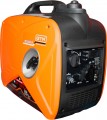 | 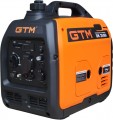 |
|---|---|---|
| GTM R2500iS | GTM DK2500i | |
| Outdated Product | Outdated Product | |
| TOP sellers | ||
| Fuel | petrol | petrol |
| Output voltage | 230 B | 230 B |
| Rated power | 2.3 kW | 2.3 kW |
| Max. power | 2.5 kW | 2.5 kW |
| Alternator | inverter | inverter |
Engine | ||
| ICE type | 4-stroke | 4-stroke |
| Motor type | Rato R120-V | DK148F |
| Engine size | 122 cm³ | 145 cm³ |
| Fuel tank volume | 4.5 L | 4.5 L |
| Starter type | manual | manual |
| Motor cooling | air | air |
Connection (sockets) | ||
| Total number of sockets | 1 | 1 |
| Sockets 230 V | 16 A x1 | 16 A x1 |
| USB charging port |  | |
| Output 12 V | socket | socket |
Features | ||
| Features | display hour metre voltmeter parallel connection | display hour metre voltmeter parallel connection |
General | ||
| Sound insulation cover | | |
| Protection level | IP 23 | |
| Sound level (7 m) | 67 dB | 70 dB |
| Dimensions | 525x320x485 mm | 525x320x485 mm |
| Weight | 25 kg | 22 kg |
| Added to E-Catalog | march 2023 | july 2022 |


Compare GTM R2500iS and DK2500i
You may be interested in
My comparisons
GTM R2500iS often compared

Glossary
Motor type
Model name of the engine installed in the generator. Knowing this name, you can, if necessary, find detailed data on the engine and clarify how it meets your requirements. In addition, model data may be needed for some specific tasks, including maintenance and repair.
Note that modern generators are often equipped with branded engines from famous manufacturers: Honda, John Deere, Mitsubishi, Volvo, etc. Such engines are more expensive than similar units from little-known brands, but this is offset by higher quality and/or solid warranty conditions , and in many cases, the ease of finding spare parts and additional documentation (such as manuals for special maintenance and minor repairs).
Note that modern generators are often equipped with branded engines from famous manufacturers: Honda, John Deere, Mitsubishi, Volvo, etc. Such engines are more expensive than similar units from little-known brands, but this is offset by higher quality and/or solid warranty conditions , and in many cases, the ease of finding spare parts and additional documentation (such as manuals for special maintenance and minor repairs).
Engine size
The working volume of the engine in a gasoline or diesel generator (see "Fuel"). Theoretically, more volume usually means more power, but in fact, everything is not so clear. Firstly, the specific power strongly depends on the type of fuel, and in gasoline units, also on the type of internal combustion engine (see above). Secondly, similar engines of the same power can have different volumes, and there is a practical point here: with the same power, a larger engine consumes more fuel, but by itself it can cost less.
Protection level
The level of protection provided by the generator housing — namely, the degree of protection of the “hardware” from dust, moisture and foreign objects. It is designated by the IP standard with two numbers, one of which corresponds to protection against solid objects and dust, the second — from moisture, for example, IP24.
According to the level of dust protection (first digit) in modern generators, the following values \u200b\u200bare found:
2 — protection against objects with a diameter of more than 12.5 mm (fingers, etc.);
3 — from objects larger than 2.5 mm (most instruments);
4 — from objects more than 1 mm (almost all tools, most wires);
5 — dustproof (full protection against contact; dust can penetrate inside, but does not affect the operation of the device).
Water protection levels can be as follows:
1 — protection against vertically falling drops of water;
2 — from water drops with a deviation of up to 15 ° from the vertical axis of the device (rain);
3 — from water drops with a deviation of up to 60 ° from the vertical axis of the device (rain with wind);
4 — against splashes from any direction (rain with strong wind);
In general, for indoor use, this indicator does not play a key role, but on the street and in similar conditions (for example, at a construction site), you should make sure that the selected generator is sufficiently protected — or else take additional protection measures.
According to the level of dust protection (first digit) in modern generators, the following values \u200b\u200bare found:
2 — protection against objects with a diameter of more than 12.5 mm (fingers, etc.);
3 — from objects larger than 2.5 mm (most instruments);
4 — from objects more than 1 mm (almost all tools, most wires);
5 — dustproof (full protection against contact; dust can penetrate inside, but does not affect the operation of the device).
Water protection levels can be as follows:
1 — protection against vertically falling drops of water;
2 — from water drops with a deviation of up to 15 ° from the vertical axis of the device (rain);
3 — from water drops with a deviation of up to 60 ° from the vertical axis of the device (rain with wind);
4 — against splashes from any direction (rain with strong wind);
In general, for indoor use, this indicator does not play a key role, but on the street and in similar conditions (for example, at a construction site), you should make sure that the selected generator is sufficiently protected — or else take additional protection measures.
Sound level (7 m)
Sound pressure level in decibels at a distance of 7 m between the noise source and the ear of the equipment operator. Since people do not work in the immediate vicinity of the generator, the parameter will be useful for estimating the noise level at a distance. For example, current European Union regulations require that the sound power of generating sets with a power of more than 2 kW does not exceed 97 dB — at a distance of 7 m, the noise from the generator engine will correspond to a sound pressure of about 72 dB.
Weight
The total weight of the unit - usually excluding fuel; the weight on full tank can be easily determined knowing the tank capacity.
In general, more powerful generators are inevitably heavier, but models with similar characteristics can differ significantly in weight. When assessing these differences and generally choosing an option based on weight, it is worth considering the specifics of the generator's use. So, if the device is often to be moved from place to place - for example, when used "on the road" - it may be worth paying attention to lighter units that are more convenient to transport. However, it is worth considering that the downside of a lightweight design is often an increased cost or a reduced degree of protection. But for stationary use, you can not pay special attention to this parameter - or even the opposite: choose a heavier (and, as a rule, more advanced and functional) option.
Regarding specific figures, it is worth noting that modern generators are generally quite massive. Thus, a small weight for such equipment is considered not only < 20 kg, but even 20-30 kg ; many units weigh 150-200 kg, or even more, and the weight of stationary industrial models is measured in tons.
In general, more powerful generators are inevitably heavier, but models with similar characteristics can differ significantly in weight. When assessing these differences and generally choosing an option based on weight, it is worth considering the specifics of the generator's use. So, if the device is often to be moved from place to place - for example, when used "on the road" - it may be worth paying attention to lighter units that are more convenient to transport. However, it is worth considering that the downside of a lightweight design is often an increased cost or a reduced degree of protection. But for stationary use, you can not pay special attention to this parameter - or even the opposite: choose a heavier (and, as a rule, more advanced and functional) option.
Regarding specific figures, it is worth noting that modern generators are generally quite massive. Thus, a small weight for such equipment is considered not only < 20 kg, but even 20-30 kg ; many units weigh 150-200 kg, or even more, and the weight of stationary industrial models is measured in tons.