
Comparison Sigma 5710721 vs Sigma 5710821
Add to comparison | 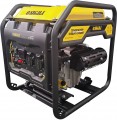 | 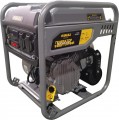 |
|---|---|---|
| Sigma 5710721 | Sigma 5710821 | |
| Outdated Product | Outdated Product | |
| TOP sellers | ||
| Fuel | petrol | petrol |
| Output voltage | 230 B | 230 B |
| Rated power | 2.2 kW | 2.2 kW |
| Max. power | 2.5 kW | 2.5 kW |
| Alternator | inverter | inverter |
| Alternator winding | copper | copper |
Engine | ||
| ICE type | 4-stroke | 4-stroke |
| Engine size | 212 cm³ | 212 cm³ |
| Power | 7 hp | 7 hp |
| Fuel tank volume | 12 L | 7 L |
| Fuel level indicator |  | |
| Starter type | manual | manual |
| Motor cooling | air | air |
Connection (sockets) | ||
| Total number of sockets | 2 | 2 |
| Sockets 230 V | 16 A x2 | 16 A x2 |
| Output 12 V | terminals | terminals |
Features | ||
| Features | display hour metre voltmeter | display hour metre voltmeter |
General | ||
| Sound level (7 m) | 72 dB | 72 dB |
| Dimensions | 530x450x550 mm | 450x370x470 mm |
| Weight | 26 kg | 25 kg |
| Added to E-Catalog | january 2023 | january 2023 |


Compare Sigma 5710721 and 5710821
You may be interested in
Sigma 5710721 often compared


Sigma 5710821 often compared


Glossary
Fuel tank volume
The volume of the fuel tank installed in the generator.
Knowing the fuel consumption (see above) and the capacity of the tank, you can calculate the operating time on one gas station (if it is not indicated in the specifications). However, a more capacious tank is also more bulky. Therefore, manufacturers choose tanks based on the general level and "voracity" of the generator — in order to provide an acceptable operating time without a significant increase in size and weight. So in general, this parameter is more of a reference than practically significant.
As for the numbers, in low-power models, tanks are installed for 5 – 10 liters, or even less ; in heavy professional equipment, this figure can exceed 50 liters.
Knowing the fuel consumption (see above) and the capacity of the tank, you can calculate the operating time on one gas station (if it is not indicated in the specifications). However, a more capacious tank is also more bulky. Therefore, manufacturers choose tanks based on the general level and "voracity" of the generator — in order to provide an acceptable operating time without a significant increase in size and weight. So in general, this parameter is more of a reference than practically significant.
As for the numbers, in low-power models, tanks are installed for 5 – 10 liters, or even less ; in heavy professional equipment, this figure can exceed 50 liters.
Weight
The total weight of the unit - usually excluding fuel; the weight on full tank can be easily determined knowing the tank capacity.
In general, more powerful generators are inevitably heavier, but models with similar characteristics can differ significantly in weight. When assessing these differences and generally choosing an option based on weight, it is worth considering the specifics of the generator's use. So, if the device is often to be moved from place to place - for example, when used "on the road" - it may be worth paying attention to lighter units that are more convenient to transport. However, it is worth considering that the downside of a lightweight design is often an increased cost or a reduced degree of protection. But for stationary use, you can not pay special attention to this parameter - or even the opposite: choose a heavier (and, as a rule, more advanced and functional) option.
Regarding specific figures, it is worth noting that modern generators are generally quite massive. Thus, a small weight for such equipment is considered not only < 20 kg, but even 20-30 kg ; many units weigh 150-200 kg, or even more, and the weight of stationary industrial models is measured in tons.
In general, more powerful generators are inevitably heavier, but models with similar characteristics can differ significantly in weight. When assessing these differences and generally choosing an option based on weight, it is worth considering the specifics of the generator's use. So, if the device is often to be moved from place to place - for example, when used "on the road" - it may be worth paying attention to lighter units that are more convenient to transport. However, it is worth considering that the downside of a lightweight design is often an increased cost or a reduced degree of protection. But for stationary use, you can not pay special attention to this parameter - or even the opposite: choose a heavier (and, as a rule, more advanced and functional) option.
Regarding specific figures, it is worth noting that modern generators are generally quite massive. Thus, a small weight for such equipment is considered not only < 20 kg, but even 20-30 kg ; many units weigh 150-200 kg, or even more, and the weight of stationary industrial models is measured in tons.