
Comparison DeWALT DCF850N vs DeWALT DCF887N
Add to comparison | 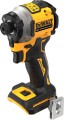 | 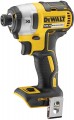 |
|---|---|---|
| DeWALT DCF850N | DeWALT DCF887N | |
| Outdated Product | from $150.02 | |
| User reviews | ||
| TOP sellers | ||
Brushless motor. Impact mode. Backlight. Big torque. Electronic engine protection. Speed regulation. | ||
| Product type | screwdriver | screwdriver |
| Design | gun | gun |
Specs | ||
| Real power | 475 W | 400 W |
| Rotation speed | 1000/2800/3250 rpm | 1000/2800/3250 rpm |
| Max. beats | 3800 bpm | 3800 bpm |
| Torque | 206 Nm | 205 Nm |
| Reducer | 1-speed | 1-speed |
| Number of speeds | 3 | 3 |
| Reverse | slider | slider |
| Weight | 0.9 kg | 0.9 kg |
Chuck | ||
| Chuck type | bit holder | bit holder |
Protective functions | ||
| Motor brake |  | |
| Electronic motor protection | | |
Features | ||
| Features | impact mode smart electronics brushless motor ring lighting | impact mode smart electronics brushless motor ring lighting |
| In box | without charger | without charger |
Power supply | ||
| Power source | battery | battery |
| Battery in set | no | no |
| Battery platform | DeWALT 18V XR | DeWALT 18V XR |
| Battery voltage | 18 В | 18 В |
| Compatible batteries | DCB180, DCB181, DCB182, DCB183, DCB184, DCB185, DCB187, DCB189, DCB546 | DCB180, DCB181, DCB182, DCB183, DCB184, DCB185, DCB187, DCB189, DCB546 |
| Added to E-Catalog | december 2021 | december 2016 |


Compare DeWALT DCF850N and DCF887N
Comparing the DeWALT DCF850N and DeWALT DCF887N, it can be noted that both screwdrivers have a pistol design and similar features, such as a maximum speed of 3250 RPM and a maximum number of impacts of 3800 IPM. However, the DCF850N has greater useful power of 475 W compared to 400 W in the DCF887N. Both devices are powered by DeWALT 18V XR batteries and have identical functions, including impact mode and a brushless motor. The weight of both models is 0.9 kg, making them convenient to use.
You may be interested in
DeWALT DCF850N often compared


DeWALT DCF887N often compared


Glossary
Real power
The useful power of the tool is the maximum power that it can deliver to the working nozzle. This power is always less than the power consumed (see below), since part of the electricity inevitably goes to heat and friction in the tool mechanisms. In addition, this parameter is not given for every model, often information in the characteristics is limited to power consumption. Nevertheless, the actual capabilities of the tool directly depend on the net power: the higher it is, the greater the speed and/or torque this model is able to develop, the easier it is for it to cope with tasks that require high efforts. So, to compare different devices with each other, it is best to use this parameter (of course, you can only compare models of the same type or similar in type).
Also note that high working power is not always an advantage: it accordingly affects the dimensions, weight and price of the tool, while in fact high speeds and efforts are not always necessary. Detailed recommendations on the optimal values for different tools and different types of work can be found in special sources.
Also note that high working power is not always an advantage: it accordingly affects the dimensions, weight and price of the tool, while in fact high speeds and efforts are not always necessary. Detailed recommendations on the optimal values for different tools and different types of work can be found in special sources.
Torque
Torque is the maximum force with which this model is capable of turning the working nozzle.
Higher torque gives more options, it allows you to cope with complex tasks such as drilling in hard materials, unscrewing stuck screws and nuts, etc. On the other hand, a lot of force requires corresponding power — and this, in turn, affects the dimensions , weight and cost of the tool itself, and also puts forward increased power requirements (mains power, battery capacity or pressure / compressor performance). And for some tasks, excessive torque is basically unacceptable, so for maximum versatility, it is desirable to have torque control — and this affects the cost even more. And the more steps, the more optimally you can configure the tool to perform a particular type of work. So the general rule is this: when choosing, it is worth considering the specifics of the planned work, and not chasing the greatest working effort.
Detailed recommendations on choosing the optimal torque for different types of tools (see "Device") can be found in special sources. Here we note that it is of key importance primarily for screwdrivers, although it is also given for other types of tools. At the same time, in the “weakest” models, the maximum working force does not exceed 15 Nm, in the most powerful ones it is more than 150 Nm.
Higher torque gives more options, it allows you to cope with complex tasks such as drilling in hard materials, unscrewing stuck screws and nuts, etc. On the other hand, a lot of force requires corresponding power — and this, in turn, affects the dimensions , weight and cost of the tool itself, and also puts forward increased power requirements (mains power, battery capacity or pressure / compressor performance). And for some tasks, excessive torque is basically unacceptable, so for maximum versatility, it is desirable to have torque control — and this affects the cost even more. And the more steps, the more optimally you can configure the tool to perform a particular type of work. So the general rule is this: when choosing, it is worth considering the specifics of the planned work, and not chasing the greatest working effort.
Detailed recommendations on choosing the optimal torque for different types of tools (see "Device") can be found in special sources. Here we note that it is of key importance primarily for screwdrivers, although it is also given for other types of tools. At the same time, in the “weakest” models, the maximum working force does not exceed 15 Nm, in the most powerful ones it is more than 150 Nm.