
Comparison Nexen N`Fera Sport SU2 225/65 R17 102H vs Nexen N`Fera RU1 225/65 R17 102H
Add to comparison | 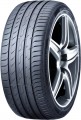 | 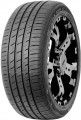 |
|---|---|---|
| Nexen N`Fera Sport SU2 225/65 R17 102H | Nexen N`Fera RU1 225/65 R17 102H | |
| Outdated Product | from $70.52 up to $84.72 | |
| User reviews | ||
| TOP sellers | ||
| Season | summer | summer |
| Product Type | passenger car / SUV | passenger car / SUV |
| Width | 225 mm | 225 mm |
| Aspect ratio | 65 % | 65 % |
| Tyre inner diameter | 17 " | 17 " |
| Load index | 102 | 102 |
| Speed rating | H | H |
| Orientation | non-directional | non-directional |
| Pattern Symmetry | asymmetric | asymmetric |
| Fuel efficiency | D | |
| Wet Grip | A | |
| Noise Level | 69 dB | |
| Added to E-Catalog | march 2021 | february 2015 |


Compare Nexen N`Fera Sport SU2 225/65 R17 102H and N`Fera RU1 225/65 R17 102H
You may be interested in
Nexen N`Fera RU1 often compared


Glossary
Fuel efficiency
The rolling resistance rating that the tyre corresponds to. The higher this figure, the lower the resistance, the less fuel is spent to overcome it and the more economical the tyre is. Efficiency indices are denoted by letters of the Latin alphabet in descending order of efficiency: A(highest efficiency), B, C, D, E, F, G(lowest efficiency).
With other things being equal, more economical tyres tend to cost more, but the difference is offset by fuel economy.
With other things being equal, more economical tyres tend to cost more, but the difference is offset by fuel economy.
Wet Grip
An index that determines the overall performance of a tyre on wet pavement. Lettered from A(highest) to G(lowest); intermediate options, respectively — B, C, D, E and F.
The higher this indicator, the stronger the tyre grips to the wet road, the more efficient and safer it will be in difficult weather conditions. At the same time, it is worth noting that a low grip index does not mean unsuitability for driving in rain or snow — you just need to be more careful using such tyres. Conversely, a high index does not relieve the driver of the need to be careful in difficult weather conditions.
The higher this indicator, the stronger the tyre grips to the wet road, the more efficient and safer it will be in difficult weather conditions. At the same time, it is worth noting that a low grip index does not mean unsuitability for driving in rain or snow — you just need to be more careful using such tyres. Conversely, a high index does not relieve the driver of the need to be careful in difficult weather conditions.
Noise Level
The average noise level created by a tyre while driving. The lower this indicator, the more comfortable this model will be, the less additional noise it will create.
Note that EU rules provide 3 categories of tyres in terms of noise. “Quiet” are considered models with an index of up to 68 dB, “medium” — 68 – 71 dB, “loud” — 72 dB and above.
Note that EU rules provide 3 categories of tyres in terms of noise. “Quiet” are considered models with an index of up to 68 dB, “medium” — 68 – 71 dB, “loud” — 72 dB and above.