
Comparison Matador MP 47 Hectorra 3 185/65 R14 86T vs Gislaved Urban*Speed 185/65 R14 86T
Add to comparison | 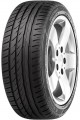 | 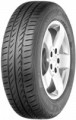 |
|---|---|---|
| Matador MP 47 Hectorra 3 185/65 R14 86T | Gislaved Urban*Speed 185/65 R14 86T | |
| Outdated Product | from $36.24 up to $42.16 | |
| User reviews | ||
| TOP sellers | ||
| Season | summer | summer |
| Product Type | passenger car / SUV | passenger car / SUV |
| Width | 185 mm | 185 mm |
| Aspect ratio | 65 % | 65 % |
| Tyre inner diameter | 14 " | 14 " |
| Load index | 86 | 86 |
| Speed rating | T | T |
| Orientation | non-directional | non-directional |
| Pattern Symmetry | asymmetric | symmetric |
| Fuel efficiency | E | D |
| Wet Grip | B | C |
| Noise Level | 70 dB | 70 dB |
| Added to E-Catalog | january 2018 | february 2012 |


Compare Matador MP 47 Hectorra 3 185/65 R14 86T and Gislaved Urban*Speed 185/65 R14 86T
You may be interested in
Matador MP 47 Hectorra 3 often compared


Glossary
Pattern Symmetry
This parameter shows how the tread pattern is arranged on the left and right sides from its center line, which in turn affects grip characteristics, water drainage, noise level, handling, and mounting features.
— Symmetrical. Symmetrical tread pattern on both sides of the center, simplifying construction and installation requirements. Such a tire is easier to mount and swap between wheels, provided it has no separate directionality (Rotation). Symmetrical tires are often chosen for calm urban and highway driving, where comfort, predictable behavior, even wear, and affordable price are important.
— Asymmetrical. An asymmetrical tire is designed for more precise tread work by dividing the inner and outer zones. The outer part is usually stiffer and bulkier to ensure the vehicle holds better in corners, while the inner part often has grooves for water drainage and stability on wet surfaces. This construction is especially useful on high-speed tires, powerful vehicles, and in variable weather conditions. The main difference from a symmetrical tire is the need to follow the Outside/Inside marking during installation.
— Symmetrical. Symmetrical tread pattern on both sides of the center, simplifying construction and installation requirements. Such a tire is easier to mount and swap between wheels, provided it has no separate directionality (Rotation). Symmetrical tires are often chosen for calm urban and highway driving, where comfort, predictable behavior, even wear, and affordable price are important.
— Asymmetrical. An asymmetrical tire is designed for more precise tread work by dividing the inner and outer zones. The outer part is usually stiffer and bulkier to ensure the vehicle holds better in corners, while the inner part often has grooves for water drainage and stability on wet surfaces. This construction is especially useful on high-speed tires, powerful vehicles, and in variable weather conditions. The main difference from a symmetrical tire is the need to follow the Outside/Inside marking during installation.
Fuel efficiency
The rolling resistance rating that the tyre corresponds to. The higher this figure, the lower the resistance, the less fuel is spent to overcome it and the more economical the tyre is. Efficiency indices are denoted by letters of the Latin alphabet in descending order of efficiency: A(highest efficiency), B, C, D, E, F, G(lowest efficiency).
With other things being equal, more economical tyres tend to cost more, but the difference is offset by fuel economy.
With other things being equal, more economical tyres tend to cost more, but the difference is offset by fuel economy.
Wet Grip
An index that determines the overall performance of a tyre on wet pavement. Lettered from A(highest) to G(lowest); intermediate options, respectively — B, C, D, E and F.
The higher this indicator, the stronger the tyre grips to the wet road, the more efficient and safer it will be in difficult weather conditions. At the same time, it is worth noting that a low grip index does not mean unsuitability for driving in rain or snow — you just need to be more careful using such tyres. Conversely, a high index does not relieve the driver of the need to be careful in difficult weather conditions.
The higher this indicator, the stronger the tyre grips to the wet road, the more efficient and safer it will be in difficult weather conditions. At the same time, it is worth noting that a low grip index does not mean unsuitability for driving in rain or snow — you just need to be more careful using such tyres. Conversely, a high index does not relieve the driver of the need to be careful in difficult weather conditions.