
Comparison Bosch BFL523MB3 vs Bosch BFL 623MC3
Add to comparison | 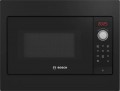 | 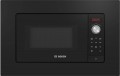 |
|---|---|---|
| Bosch BFL523MB3 | Bosch BFL 623MC3 | |
| Outdated Product | Outdated Product | |
| TOP sellers | ||
| Capacity | 20 L | 20 L |
Technical specs | ||
| Microwave power | 800 W | 800 W |
| Power consumption | 1270 W | 1270 W |
| Controls | pop-out knobs + touch controls | rotary knobs + touch controls |
| Turntable |  | |
| Turntable diameter | 270 mm | 270 mm |
| Power levels | 5 | 5 |
| Features | custom programme defrosting autocooking auto-defrost | custom programme defrosting autocooking auto-defrost |
More specs | ||
| Door opening | side (left) | side (left) |
| Door opens with | button | button |
| Inner coating | stainless steel | stainless steel |
| Steam cleaning | | |
| Display | LED | LED |
| Child lock |  | |
| Dimensions (HxWxD) | 38.2x49.5x33.5 cm | 38.2x59.5x33.5 cm |
| Embedded dimensions (HxWxD) | 365x468x320 mm | 362x560x320 mm |
| Weight | 14 kg | |
| Color | ||
| Added to E-Catalog | july 2023 | september 2021 |


Compare Bosch BFL523MB3 and BFL 623MC3
You may be interested in
My comparisons
Bosch BFL523MB3 often compared


Bosch BFL 623MC3 often compared


Glossary
Controls
The main type of control elements in a microwave oven.
— Rotary knobs. Mechanical rotary knobs most often are used in the simplest low-cost models: one knob sets the heating power, and the other — the operating time. The accuracy of such adjustments is not very high; this is especially true for the operating time. However, there are also quite advanced microwaves with similar controls — they may provide other ways to use rotary knobs, as well as additional controls (for example, buttons).
— Push-buttons. Control using buttons, usually, implies the presence of a display — otherwise, it would be difficult to control the operation. This option allows you to set the parameters more accurately — in particular, the timer in push-button models is usually electronic. In addition, it is well-suited for models with predefined recipes, special modes, etc. Therefore, buttons are a sign of a model with advanced features, the functionality of which is not limited to constant heating at a certain power.
— Rotary knobs + touch controls. Controls include both rotary knobs and touch controls. The main features of both are described above. Such controls, as well as purely touch controls, are found mainly in fairly advanced models. On the one hand, rotary knobs are more convenient for some tasks (for example, adjusting power or selecting an operating mode). On the other hand, they somewhat complicate the design of the control panel and make it difficult to cle...an. Therefore, this option has not received much popularity.
— Touch controls. Another type of control, similar to the buttons described above, with one difference — the role of the buttons, in this case, is played by touch sensors. Touch controls look more advanced than push-buttons, are easier to operate, and have no protruding parts, making them less dirty and easier to clean. The disadvantage of touch controls can be called a higher cost, which is why this option is found mainly in expensive models.
— Pop-out knobs + touch controls. Pop-out knobs are a variation of the rotary knobs described above, in which the knobs can be recessed into the control panel. Usually, pop-out knobs are designed to stay outside only during the direct setting of the operating mode. And for the time when the oven is not in use or works in one mode, they can be hidden. It gives the unit a neat appearance, reduces the places where dirt can accumulate, and makes the front panel easier to clean. And touch controls complement the style of the device and underline its premium performance.
— Rotary knobs. Mechanical rotary knobs most often are used in the simplest low-cost models: one knob sets the heating power, and the other — the operating time. The accuracy of such adjustments is not very high; this is especially true for the operating time. However, there are also quite advanced microwaves with similar controls — they may provide other ways to use rotary knobs, as well as additional controls (for example, buttons).
— Push-buttons. Control using buttons, usually, implies the presence of a display — otherwise, it would be difficult to control the operation. This option allows you to set the parameters more accurately — in particular, the timer in push-button models is usually electronic. In addition, it is well-suited for models with predefined recipes, special modes, etc. Therefore, buttons are a sign of a model with advanced features, the functionality of which is not limited to constant heating at a certain power.
— Rotary knobs + touch controls. Controls include both rotary knobs and touch controls. The main features of both are described above. Such controls, as well as purely touch controls, are found mainly in fairly advanced models. On the one hand, rotary knobs are more convenient for some tasks (for example, adjusting power or selecting an operating mode). On the other hand, they somewhat complicate the design of the control panel and make it difficult to cle...an. Therefore, this option has not received much popularity.
— Touch controls. Another type of control, similar to the buttons described above, with one difference — the role of the buttons, in this case, is played by touch sensors. Touch controls look more advanced than push-buttons, are easier to operate, and have no protruding parts, making them less dirty and easier to clean. The disadvantage of touch controls can be called a higher cost, which is why this option is found mainly in expensive models.
— Pop-out knobs + touch controls. Pop-out knobs are a variation of the rotary knobs described above, in which the knobs can be recessed into the control panel. Usually, pop-out knobs are designed to stay outside only during the direct setting of the operating mode. And for the time when the oven is not in use or works in one mode, they can be hidden. It gives the unit a neat appearance, reduces the places where dirt can accumulate, and makes the front panel easier to clean. And touch controls complement the style of the device and underline its premium performance.
Child lock
A very important feature for those users who have children. It allows you to block the device from playful children's hands, thereby avoiding many dangerous situations. The way to disable the lock is chosen in such a way that only an adult can do it.