
Comparison BASEUS F01A vs BASEUS F01B
Add to comparison | 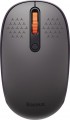 | 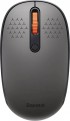 |
|---|---|---|
| BASEUS F01A | BASEUS F01B | |
from $8.99 | from $13.99 | |
| User reviews | ||
| TOP sellers | ||
| Product type | mouse | mouse |
| Connection | radio | Bluetooth/radio |
| Multi-Device |  |  |
| Sensor | optical | optical |
Sensor and control | ||
| Sensor resolution | 800 – 1600 DPI | 800 – 1600 DPI |
| Number of buttons | 3 | 3 |
| DPI-button | | |
| Scroll wheels | 1 | 1 |
Connection and power supply | ||
| Power source | 1xAA | 1xAA |
General | ||
| Suitable for left-handers | | |
| Left handed | | |
| In box | USB-A dongle | USB-A dongle |
| Added to E-Catalog | october 2023 | october 2023 |


Compare BASEUS F01A and F01B
Mice BASEUS F01A and F01B have similar features, such as optical technology, sensor resolution from 800 to 1600 DPI, and a range of 10 meters. However, the F01B stands out with its Bluetooth support, allowing it to connect to multiple devices simultaneously, whereas the F01A only uses radio signal. Both models have three buttons and the same power source (1xAA), but the F01B is available in a wider range of colors. Users note that the F01B is more versatile due to the Multi-Device feature, which can be a deciding factor when choosing between these mice.
You may be interested in
Glossary
Connection
The type of connection used by the mouse.
All types of mouse connection can be divided into wired and wireless. There are also combined models that allow both methods; however, for a number of reasons, they have not received much distribution.
Wired mice can vary in connector type; however, the universal standard nowadays is USB, other options are much less common (see "Cable" for them). Anyway, such mice are much cheaper than wireless counterparts, moreover, they do not require batteries / accumulators and have an almost unlimited lifespan. On the other hand, the wire restricts mobility and can be inconvenient when connecting, especially if the computer is located far away or in a hard-to-reach place.
Wireless devices, in turn, can connect via radio, Bluetooth, or Wi-Fi ; in some models, two options are combined — at the user's choice, (usually radio and Bluetooth). Regardless of the interface used, all such models are more convenient than wired ones due, in fact, to the absence of a cable; and their range is at least a few metres, so a wireless mouse can also work as a kind of remote control. At the same time, a wireless connection is more expensive than a wired connection, and besides, it requires autonomous power supply — as a result, the per...iod of continuous operation of the mouse is limited.
As for the different types of wireless connection, here are their features:
— Radio. To connect over the air, usually, a wireless adapter is used, which is connected to the USB port of the computer. This method is convenient in that it can be used with any computer, including systems that do not have built-in Bluetooth or Wi-Fi modules. The disadvantages of this option include the fact that the adapter requires a free connector; as a result, with a small number of USB ports, difficulties can arise. However, this moment, if necessary, can be easily corrected by connecting a USB hub; so it is this connection method that is most popular among modern wireless mice.
— Bluetooth. The main advantage of this connection method is that many modern devices — laptops, most monoblock computers, smart TVs, etc. — have built-in Bluetooth modules. Thus, you can connect the mouse to such equipment directly, without occupying hardware connectors. And for PCs not equipped with internal Bluetooth modules, appropriate adapters are available (which may even be included with the mouse). In addition, some advanced models with such a connection are able to remember several Bluetooth devices at the same time and switch between them literally “with the touch of a button”. The Bluetooth communication range is at least 10 m with line of sight.
— Wi-Fi. A rather specific option, which is extremely rare — in certain models of laptop mice (see "In the direction"). In many respects it is similar to Bluetooth — in particular, it is designed mainly to work with built-in modules and allows you to use a mouse without occupying hardware connectors. At the same time, the range of communication via Wi-Fi is much greater. On the other hand, this advantage is not of fundamental importance, and on the technical side, the creation of Wi-Fi mice is associated with certain difficulties. That is why this type of connection has not received distribution.
All types of mouse connection can be divided into wired and wireless. There are also combined models that allow both methods; however, for a number of reasons, they have not received much distribution.
Wired mice can vary in connector type; however, the universal standard nowadays is USB, other options are much less common (see "Cable" for them). Anyway, such mice are much cheaper than wireless counterparts, moreover, they do not require batteries / accumulators and have an almost unlimited lifespan. On the other hand, the wire restricts mobility and can be inconvenient when connecting, especially if the computer is located far away or in a hard-to-reach place.
Wireless devices, in turn, can connect via radio, Bluetooth, or Wi-Fi ; in some models, two options are combined — at the user's choice, (usually radio and Bluetooth). Regardless of the interface used, all such models are more convenient than wired ones due, in fact, to the absence of a cable; and their range is at least a few metres, so a wireless mouse can also work as a kind of remote control. At the same time, a wireless connection is more expensive than a wired connection, and besides, it requires autonomous power supply — as a result, the per...iod of continuous operation of the mouse is limited.
As for the different types of wireless connection, here are their features:
— Radio. To connect over the air, usually, a wireless adapter is used, which is connected to the USB port of the computer. This method is convenient in that it can be used with any computer, including systems that do not have built-in Bluetooth or Wi-Fi modules. The disadvantages of this option include the fact that the adapter requires a free connector; as a result, with a small number of USB ports, difficulties can arise. However, this moment, if necessary, can be easily corrected by connecting a USB hub; so it is this connection method that is most popular among modern wireless mice.
— Bluetooth. The main advantage of this connection method is that many modern devices — laptops, most monoblock computers, smart TVs, etc. — have built-in Bluetooth modules. Thus, you can connect the mouse to such equipment directly, without occupying hardware connectors. And for PCs not equipped with internal Bluetooth modules, appropriate adapters are available (which may even be included with the mouse). In addition, some advanced models with such a connection are able to remember several Bluetooth devices at the same time and switch between them literally “with the touch of a button”. The Bluetooth communication range is at least 10 m with line of sight.
— Wi-Fi. A rather specific option, which is extremely rare — in certain models of laptop mice (see "In the direction"). In many respects it is similar to Bluetooth — in particular, it is designed mainly to work with built-in modules and allows you to use a mouse without occupying hardware connectors. At the same time, the range of communication via Wi-Fi is much greater. On the other hand, this advantage is not of fundamental importance, and on the technical side, the creation of Wi-Fi mice is associated with certain difficulties. That is why this type of connection has not received distribution.
Multi-Device
Mouse support for Multi-Device technology.
This technology is found exclusively in models with wireless connectivity (see “Connection type”). It allows you to pair the mouse with several devices simultaneously and quickly switch between them without fiddling with the settings every time; in many models, such switching is carried out literally at the touch of a button. Thanks to this, you can, for example, easily use the mouse with both your home computer and a TV running Android TV, connecting to one or another device as needed.
Note that it would not hurt to clarify the specific features of the Multi-device separately. First of all, this concerns the number of simultaneously supported devices.
This technology is found exclusively in models with wireless connectivity (see “Connection type”). It allows you to pair the mouse with several devices simultaneously and quickly switch between them without fiddling with the settings every time; in many models, such switching is carried out literally at the touch of a button. Thanks to this, you can, for example, easily use the mouse with both your home computer and a TV running Android TV, connecting to one or another device as needed.
Note that it would not hurt to clarify the specific features of the Multi-device separately. First of all, this concerns the number of simultaneously supported devices.