
Comparison Defunc True Audio vs SOUNDPEATS Capsule3 Pro
Add to comparison | 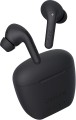 | 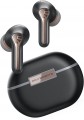 |
|---|---|---|
| Defunc True Audio | SOUNDPEATS Capsule3 Pro | |
| Outdated Product | from $105.99 | |
| TOP sellers | ||
Low audio latency (50ms). Long battery life (with case). | Game mode with low audio latency (70ms). Bluetooth v5.3. Support for LDAC codec. Active noise cancellation. Long battery life. | |
Connection and design | ||
| Design | in-ear | in-ear |
| Connection type | wireless | wireless |
| Connection | Bluetooth v5.3 | Bluetooth v5.3 |
| Range | 10 m | 10 m |
Specs | ||
| Hi-Res Audio |  |  |
| Game mode (low input lag) | | |
| Audio delay | 50 ms | 70 ms |
| Impedance | 32 Ohm | |
| Frequency range | 20 – 20000 Hz | 20 – 40000 Hz |
| Sensitivity | 103 dB | |
| Speaker size | 13 mm | 12 mm |
| Emitter type | dynamic | dynamic |
Microphone specs | ||
| Microphone | built into the case | built into the case |
| Number of microphones | 3 pcs in each earphone | |
| Microphone noise canceling | ENC | cVc |
Features | ||
| Volume control | | |
| Noise cancellation | ANC | |
| Transparent mode | | |
| Codec support | AAC | AAC LDAC |
| Voice assistant | Amazon Alexa / Apple Siri / Google Assistant | Apple Siri / Google Assistant |
Power supply | ||
| Power source | battery | battery |
| Headphone battery capacity | 50 mAh | 35 mAh |
| Case battery capacity | 500 mAh | 500 mAh |
| Charging time | 1.5 h | |
| Operating time (music) | 5 h | 8 h |
| Operating time (with case) | 30 h | 52 h |
| Charging port | USB-C | USB-C |
General | ||
| Touch control | | |
| Waterproof | IPX4 | IPX4 |
| Weight | 5 g | |
| In box | silicone tips 3 pairs charging case | silicone tips 3 pairs charging case |
| Color | ||
| Added to E-Catalog | july 2023 | june 2023 |


Compare Defunc True Audio and SOUNDPEATS Capsule3 Pro
You may be interested in
SOUNDPEATS Capsule3 Pro often compared

Glossary
Hi-Res Audio
Headphone support for Hi-Res Audio. The corresponding format is designed to provide a sound close to that recorded in the studio. Hi-Res Audio refers to a digital signal with parameters from 96 kHz / 24 bits, and for analog technology, the requirement for an extended frequency response is set from 40 kHz. Audio tracks in this format sound as close as possible to the original ideas of the authors of the compositions. The Hi-Res license marks premium headphones for avid audiophiles.
Game mode (low input lag)
A special game mode in wireless headphones that minimizes the delay in transmitting an audio track from a connected source. Low Input Lag) provides the ability to quickly respond to what is happening in virtual battles and prevents the picture from being out of sync with the sound. At the same time, when you activate the game mode, wireless headphones will be discharged faster.
Audio delay
Sound delay in wireless headphones is a natural process caused by the specifics of audio data transmission over Bluetooth. It can be either almost imperceptible or clearly interfere with comfortable gameplay or watching video content. This paragraph provides the declared sound delay time in milliseconds, which is written in the technical specifications for a particular headphone model.
Impedance
Impedance refers to the headphone's nominal resistance to AC current, such as an audio signal.
Other things being equal, a higher impedance reduces distortion, but requires a more powerful amplifier — otherwise the headphones simply will not be able to produce sufficient volume. Thus, the choice of resistance depends primarily on which signal source you plan to connect the "ears". So, for a portable gadget (smartphone, pocket player), an indicator of 16 ohms or less is considered optimal, 17 – 32 ohms is not bad. Higher values — 33 – 64 ohms and 65 – 96 ohms — will require quite powerful amplifiers, like those used in computers and televisions. And models with a resistance of 96 – 250 ohms and above are designed mainly for Hi-End audio equipment and professional use; for such cases, detailed recommendations for selection can be found in special sources.
Other things being equal, a higher impedance reduces distortion, but requires a more powerful amplifier — otherwise the headphones simply will not be able to produce sufficient volume. Thus, the choice of resistance depends primarily on which signal source you plan to connect the "ears". So, for a portable gadget (smartphone, pocket player), an indicator of 16 ohms or less is considered optimal, 17 – 32 ohms is not bad. Higher values — 33 – 64 ohms and 65 – 96 ohms — will require quite powerful amplifiers, like those used in computers and televisions. And models with a resistance of 96 – 250 ohms and above are designed mainly for Hi-End audio equipment and professional use; for such cases, detailed recommendations for selection can be found in special sources.
Frequency range
The range of sound frequencies that headphones can reproduce.
The wider this range, the more fully the headphones reproduce the spectrum of sound frequencies, the lower the likelihood that too low or too high frequencies will be inaccessible. However, there are some nuances to consider here. First of all, let us remind you that the perceptual range of the human ear is on average from 16 Hz to 22 kHz, and for the complete picture it is enough for headphones to cover this range. However, modern models can significantly exceed these boundaries: in many devices the lower threshold does not exceed 15 Hz, or even 10 Hz, and the upper limit can reach 25 kHz, 30 kHz and even more. Such wide ranges in themselves do not provide practical advantages, but they usually indicate a high class of headphones, and are sometimes given only for advertising purposes.
The second important point is that a wide frequency range in itself is not a guarantee of good sound: sound quality also depends on a number of parameters, primarily the amplitude-frequency response of the headphones.
The wider this range, the more fully the headphones reproduce the spectrum of sound frequencies, the lower the likelihood that too low or too high frequencies will be inaccessible. However, there are some nuances to consider here. First of all, let us remind you that the perceptual range of the human ear is on average from 16 Hz to 22 kHz, and for the complete picture it is enough for headphones to cover this range. However, modern models can significantly exceed these boundaries: in many devices the lower threshold does not exceed 15 Hz, or even 10 Hz, and the upper limit can reach 25 kHz, 30 kHz and even more. Such wide ranges in themselves do not provide practical advantages, but they usually indicate a high class of headphones, and are sometimes given only for advertising purposes.
The second important point is that a wide frequency range in itself is not a guarantee of good sound: sound quality also depends on a number of parameters, primarily the amplitude-frequency response of the headphones.
Sensitivity
Rated headphone sensitivity. Technically, this is the volume at which they sound when a certain standard signal from the amplifier is connected to them. Thus, sensitivity is one of the parameters that determine the overall volume of the headphones: the higher it is, the louder the sound will be with the same input signal level and other things being equal. However, we must not forget that the volume level also depends on the resistance (impedance, see above); moreover, it is worth choosing “ears” for a specific device first by impedance, and only then by sensitivity. In this case, one parameter can be compensated for by another: for example, a model with high resistance and high sensitivity can work even on a relatively weak amplifier.
As for specific figures, headphones with indicators of 100 dB or less are designed mainly for use in a quiet environment (in some similar models, the sensitivity does not exceed 90 dB). For use on the street, in transport and other similar conditions, it is desirable to have more sensitive headphones — about 101 – 105 dB, or even 110 dB. And in some models, this figure can reach 116 – 120 dB. and even more.
It is also worth noting that this parameter is relevant only for a wired connection according to the analogue standard — for example, via a 3.5 mm mini-...jack. When using digital interfaces like USB and wireless channels like Bluetooth, the sound is processed in the built-in headphone converter, and if you plan to mainly use this kind of application, you can not pay much attention to sensitivity.
As for specific figures, headphones with indicators of 100 dB or less are designed mainly for use in a quiet environment (in some similar models, the sensitivity does not exceed 90 dB). For use on the street, in transport and other similar conditions, it is desirable to have more sensitive headphones — about 101 – 105 dB, or even 110 dB. And in some models, this figure can reach 116 – 120 dB. and even more.
It is also worth noting that this parameter is relevant only for a wired connection according to the analogue standard — for example, via a 3.5 mm mini-...jack. When using digital interfaces like USB and wireless channels like Bluetooth, the sound is processed in the built-in headphone converter, and if you plan to mainly use this kind of application, you can not pay much attention to sensitivity.
Speaker size
The diameter of the speaker installed in the headphones; models with multiple drivers (see "Number of drivers"), usually, the size of the largest speaker is taken into account, other dimensions can be specified in the notes.
In general, this parameter is relevant primarily for over-ear headphones (see "Design"). In them, emitters can have different sizes; the larger it is, the more saturated the sound is and the better the speaker reproduces the bass, however, large emitters have a corresponding effect on the dimensions, weight and price of the headphones. But in-ear "ears" and earbuds, by definition, have very small speakers, and rich bass in them is achieved due to other design features.
In general, this parameter is relevant primarily for over-ear headphones (see "Design"). In them, emitters can have different sizes; the larger it is, the more saturated the sound is and the better the speaker reproduces the bass, however, large emitters have a corresponding effect on the dimensions, weight and price of the headphones. But in-ear "ears" and earbuds, by definition, have very small speakers, and rich bass in them is achieved due to other design features.
Number of microphones
The number of microphones in headphones indicates how many separate microphone capsules are used in the headset for voice transmission and sound processing algorithms. In simple models, there is one microphone, which is sufficient for occasional calls in a quiet room. More advanced TWS, office, and gaming headsets have 2–3 microphones per earbud: some "listen" to the voice, others to the surrounding noise, so the electronics can better eliminate interference and make speech clearer to the listener. A large number of microphones is especially important during conversations outdoors, on public transport, in an open-plan office, and for features like wind noise reduction or precise sound direction detection in gaming models. For instance, a headset with multiple microphones will transmit a voice much better during a conference call or online gaming than basic headphones with one microphone, though it may be slightly more expensive.
Microphone noise canceling
The presence of a noise reduction system in its own headphone microphone.
In accordance with the name, such a system is designed to eliminate extraneous noise - primarily during conversations. It is usually based on an electronic filter that passes the sound of a human voice and cuts off background sounds such as city noise, the rumble of wind in the microphone grille, etc. As a result, even in noisy environments, thanks to the noise reduction of the microphone, speech is clear and intelligible; True, the system inevitably introduces distortions into the final sound, but they are not critical in this case.
— ENC. ENC (Environment Noise Cancellation) technology significantly reduces ambient noise with directional microphones. It is used both in gaming devices so that gamers can easily communicate in voice chat, and in TWS earphone models so that you can comfortably talk on the phone in a noisy environment.
— cVc. Microphone noise reduction cVc (Clear Voice Capture) is an advanced technology that is found mainly in expensive headphone models. cVc algorithms effectively suppress echo and noise from the environment. Sound processing using this technology is carried out at several levels at once - the algorithm determines the reference signal-to-noise level, automatically adjusts speech to the desired volume level, applies adaptive equalizers to process the entire voice, as well as specialized filters to remove...low-frequency bubbling, sibilants and hissing.
In accordance with the name, such a system is designed to eliminate extraneous noise - primarily during conversations. It is usually based on an electronic filter that passes the sound of a human voice and cuts off background sounds such as city noise, the rumble of wind in the microphone grille, etc. As a result, even in noisy environments, thanks to the noise reduction of the microphone, speech is clear and intelligible; True, the system inevitably introduces distortions into the final sound, but they are not critical in this case.
— ENC. ENC (Environment Noise Cancellation) technology significantly reduces ambient noise with directional microphones. It is used both in gaming devices so that gamers can easily communicate in voice chat, and in TWS earphone models so that you can comfortably talk on the phone in a noisy environment.
— cVc. Microphone noise reduction cVc (Clear Voice Capture) is an advanced technology that is found mainly in expensive headphone models. cVc algorithms effectively suppress echo and noise from the environment. Sound processing using this technology is carried out at several levels at once - the algorithm determines the reference signal-to-noise level, automatically adjusts speech to the desired volume level, applies adaptive equalizers to process the entire voice, as well as specialized filters to remove...low-frequency bubbling, sibilants and hissing.