
Comparison JBL Tune Flex vs JBL Wave Flex
Add to comparison | 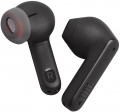 | 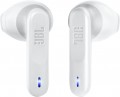 |
|---|---|---|
| JBL Tune Flex | JBL Wave Flex | |
| Compare prices 11 | from $44.00 | |
| User reviews | ||
| TOP sellers | ||
Active noise cancellation. Long battery life. Clear version: JBL Tune Flex Ghost Edition | Long battery life. | |
Connection and design | ||
| Design | inserts | inserts |
| Connection type | wireless | wireless |
| Connection | Bluetooth v5.2 | Bluetooth v5.2 |
| Range | 10 m | 10 m |
Specs | ||
| Impedance | 32 Ohm | 16 Ohm |
| Frequency range | 20 – 20000 Hz | 20 – 20000 Hz |
| Sensitivity | 110 dB | 105 dB |
| Speaker size | 12 mm | 12 mm |
| Emitter type | dynamic | dynamic |
Microphone specs | ||
| Microphone | built into the case | built into the case |
| Sensitivity | -38 dB | -38 dB |
Features | ||
| Mobile app |  | |
| Noise cancellation | ANC | |
| Transparent mode | | |
Power supply | ||
| Power source | battery | battery |
| Headphone battery capacity | 55 mAh | 40 mAh |
| Case battery capacity | 570 mAh | 500 mAh |
| Charging time | 2 h | 2 h |
| Operating time (music) | 8 h | 8 h |
| Operating time (talk) | 4.5 h | |
| Operating time (no noise canceling) | 6 h | |
| Operating time (with case) | 24 h | 32 h |
| Battery life (with case, without ANC) | 32 h | |
| Fast charge | 10 minutes for 2 hours of work | 10 minutes for 2 hours of work |
| Charging port | USB-C | USB-C |
General | ||
| Touch control | | |
| Waterproof | IPX4 | IP54 |
| Weight | 5 g | 4 g |
| In box | charging case | charging case |
| Color | ||
| Added to E-Catalog | april 2023 | april 2023 |




Compare JBL Tune Flex and Wave Flex
Headphones JBL Tune Flex and JBL Wave Flex have similar characteristics, but there are key differences. Tune Flex offers active noise cancellation (ANC) and a longer battery life with the case — up to 32 hours, while Wave Flex does not support ANC and provides around 25 hours of battery life with the case. The impedance of Tune Flex is 32 ohms, whereas Wave Flex is 16 ohms, which may affect sound quality. Wave Flex features a more comfortable semi-in-ear design, making it more convenient for long-term use but may reduce sound isolation quality. Both devices have touch controls and support the JBL Headphones app for function adjustments.
Price comparison
You may be interested in
JBL Tune Flex often compared


JBL Wave Flex often compared


Glossary
Impedance
Impedance refers to the headphone's nominal resistance to AC current, such as an audio signal.
Other things being equal, a higher impedance reduces distortion, but requires a more powerful amplifier — otherwise the headphones simply will not be able to produce sufficient volume. Thus, the choice of resistance depends primarily on which signal source you plan to connect the "ears". So, for a portable gadget (smartphone, pocket player), an indicator of 16 ohms or less is considered optimal, 17 – 32 ohms is not bad. Higher values — 33 – 64 ohms and 65 – 96 ohms — will require quite powerful amplifiers, like those used in computers and televisions. And models with a resistance of 96 – 250 ohms and above are designed mainly for Hi-End audio equipment and professional use; for such cases, detailed recommendations for selection can be found in special sources.
Other things being equal, a higher impedance reduces distortion, but requires a more powerful amplifier — otherwise the headphones simply will not be able to produce sufficient volume. Thus, the choice of resistance depends primarily on which signal source you plan to connect the "ears". So, for a portable gadget (smartphone, pocket player), an indicator of 16 ohms or less is considered optimal, 17 – 32 ohms is not bad. Higher values — 33 – 64 ohms and 65 – 96 ohms — will require quite powerful amplifiers, like those used in computers and televisions. And models with a resistance of 96 – 250 ohms and above are designed mainly for Hi-End audio equipment and professional use; for such cases, detailed recommendations for selection can be found in special sources.
Sensitivity
Rated headphone sensitivity. Technically, this is the volume at which they sound when a certain standard signal from the amplifier is connected to them. Thus, sensitivity is one of the parameters that determine the overall volume of the headphones: the higher it is, the louder the sound will be with the same input signal level and other things being equal. However, we must not forget that the volume level also depends on the resistance (impedance, see above); moreover, it is worth choosing “ears” for a specific device first by impedance, and only then by sensitivity. In this case, one parameter can be compensated for by another: for example, a model with high resistance and high sensitivity can work even on a relatively weak amplifier.
As for specific figures, headphones with indicators of 100 dB or less are designed mainly for use in a quiet environment (in some similar models, the sensitivity does not exceed 90 dB). For use on the street, in transport and other similar conditions, it is desirable to have more sensitive headphones — about 101 – 105 dB, or even 110 dB. And in some models, this figure can reach 116 – 120 dB. and even more.
It is also worth noting that this parameter is relevant only for a wired connection according to the analogue standard — for example, via a 3.5 mm mini-...jack. When using digital interfaces like USB and wireless channels like Bluetooth, the sound is processed in the built-in headphone converter, and if you plan to mainly use this kind of application, you can not pay much attention to sensitivity.
As for specific figures, headphones with indicators of 100 dB or less are designed mainly for use in a quiet environment (in some similar models, the sensitivity does not exceed 90 dB). For use on the street, in transport and other similar conditions, it is desirable to have more sensitive headphones — about 101 – 105 dB, or even 110 dB. And in some models, this figure can reach 116 – 120 dB. and even more.
It is also worth noting that this parameter is relevant only for a wired connection according to the analogue standard — for example, via a 3.5 mm mini-...jack. When using digital interfaces like USB and wireless channels like Bluetooth, the sound is processed in the built-in headphone converter, and if you plan to mainly use this kind of application, you can not pay much attention to sensitivity.
Noise cancellation
A system that reduces the influence of ambient noise on the audibility of sound through headphones. "Noise reduction" with the help of a separate microphone (or several micro) "listens" to external sounds and sends the same sounds to the headphones, but in antiphase. Due to this, the noise heard by the ears is attenuated almost to zero and the user can enjoy the sound of the headphones without interference even in a rather “loud” environment. For filtering in headphones, Active Noise Cancellation (ANC) and Environment Noise Cancellation (ENC) systems are used. The first suppresses all the noise around the listener, the second - reduces the noise level of the environment. Active noise cancellation affects the purity of the sound, but the noise from the outside spoils the picture when listening to audio tracks even more.
Also in the headphones there is an adaptive active noise reduction system Adaptive ANC, aimed at automatically adjusting the sound of the headphones depending on the level of ambient noise. In a noisy environment (for example, when traveling on the subway), the Adaptive ANC system enhances the work of “noise reduction”, in the absence of loud sounds from outside, it weakens the noise reduction.
Also in the headphones there is an adaptive active noise reduction system Adaptive ANC, aimed at automatically adjusting the sound of the headphones depending on the level of ambient noise. In a noisy environment (for example, when traveling on the subway), the Adaptive ANC system enhances the work of “noise reduction”, in the absence of loud sounds from outside, it weakens the noise reduction.
Headphone battery capacity
The capacity of the battery installed in the headphones of the corresponding design (see "Power").
Theoretically, a higher capacity allows to achieve greater battery life, but in fact, the operating time also depends on the power consumption of the headphones — and it can be very different, depending on the characteristics and design features. So this parameter is secondary, and when choosing it is worth paying attention not so much to the battery capacity, but to the directly claimed operating time (see below).
Theoretically, a higher capacity allows to achieve greater battery life, but in fact, the operating time also depends on the power consumption of the headphones — and it can be very different, depending on the characteristics and design features. So this parameter is secondary, and when choosing it is worth paying attention not so much to the battery capacity, but to the directly claimed operating time (see below).
Case battery capacity
The capacity of the battery installed in the case (case) for headphones.
This parameter is relevant only for true wireless models (see "Cable type"). Recall that these headphones are charged from a case, which is usually equipped with its own battery and actually works in standalone power bank mode. Knowing the capacity of the battery in the case and in the headphones, you can estimate how many charges of the “ears” will last for one charge of the case. However, it should be taken into account that in the process of charging the headphones, part of the energy is inevitably spent on third-party losses, and the effective capacity of the case turns out to be somewhere 1.6 times less than the claimed one. This is the starting point for calculations: for example, a 300 mAh case will actually be able to transfer 300 / 1.6 = 187 mAh of energy to the headphones, and 30 mAh “ears” from such a battery can be fully charged about 6 times (187 / 30 ≈ 6).
This parameter is relevant only for true wireless models (see "Cable type"). Recall that these headphones are charged from a case, which is usually equipped with its own battery and actually works in standalone power bank mode. Knowing the capacity of the battery in the case and in the headphones, you can estimate how many charges of the “ears” will last for one charge of the case. However, it should be taken into account that in the process of charging the headphones, part of the energy is inevitably spent on third-party losses, and the effective capacity of the case turns out to be somewhere 1.6 times less than the claimed one. This is the starting point for calculations: for example, a 300 mAh case will actually be able to transfer 300 / 1.6 = 187 mAh of energy to the headphones, and 30 mAh “ears” from such a battery can be fully charged about 6 times (187 / 30 ≈ 6).
Operating time (talk)
The maximum battery life of headphones on one full charge of the battery or replaceable batteries in talk mode. A long working time will be relevant for those who expect to regularly conduct long telephone conversations. Note that in talk mode, autonomy may be lower than when listening to music, since the use of microphones and clear voice transmission algorithms puts an additional burden on the hardware of the headphones.
Operating time (no noise canceling)
How long does the active noise canceling headphones (see above) last on a single battery charge (or a set of batteries) when noise canceling is not used.
This function is quite “gluttonous” in terms of battery consumption, up to half of the total energy consumed by the headphones can go to its work. Thus, models with noise reduction can indicate both overall battery life (see "Operating time"), and battery life with the noise reduction turned off.
This function is quite “gluttonous” in terms of battery consumption, up to half of the total energy consumed by the headphones can go to its work. Thus, models with noise reduction can indicate both overall battery life (see "Operating time"), and battery life with the noise reduction turned off.
Operating time (with case)
The maximum operating time of TWS headphones, taking into account recharging with a native case. But this time is not continuous use, it takes into account breaks for "refueling". Anyway, this parameter allows you to understand for how long you can leave the network (for example, how many nights to spend in a tent to the accompaniment of your favorite artist).
Battery life (with case, without ANC)
Total battery life of the set when active noise cancellation is turned off, considering charging from the case. To put it simply, it starts by calculating how many hours the headphones themselves can play music on a single charge, then how many times the charging case can fully "recharge" them, and as a result, the total reserve is obtained — for example, 20-30 hours or more. The indicator of operating time (with the case, without ANC noise cancellation) is important for those who frequently travel or don't like to constantly charge the headset: during trips, business trips, long walks, or days when music and calls play almost continuously. Compared to the mode with noise cancellation turned on, these values are usually noticeably higher, so this parameter helps to understand the maximum potential "range" of a model with more economical use.