
Comparison Beats Fit Pro vs Beats Studio Buds
Add to comparison | 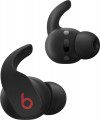 | 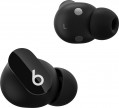 |
|---|---|---|
| Beats Fit Pro | Beats Studio Buds | |
| Compare prices 11 | Compare prices 30 | |
| User reviews | ||
| TOP sellers | ||
Fit Pro is equipped with the Apple H1 chip, which allows you to use the Siri voice assistant, as well as quickly connect with Apple devices. The position sensor only plays music when you use the headphones. The recycled battery allows you to listen to music up to 9 hours. 5 minutes of charging is enough for 1.5 hours of work. | USB-C charging. IPX4 splashproof. Bluetooth 5.2 support. AAC codec No proximity sensor (auto-pause mode). | |
Connection and design | ||
| Features | for active sports | |
| Design | in-ear | in-ear |
| Connection type | wireless | wireless |
| Connection | Bluetooth v5.0 | Bluetooth |
| Range | 10 m | 10 m |
Specs | ||
| Speaker size | 8.2 mm | |
| Emitter type | dynamic | dynamic |
Microphone specs | ||
| Microphone | built into the case | built into the case |
| Microphone noise canceling | ENC | ENC |
Features | ||
| Autopause |  |  |
| Noise cancellation | ANC | ANC |
| Transparent mode | | |
| Codec support | AAC | AAC |
Power supply | ||
| Power source | battery | battery |
| Operating time (music) | 6 h | 5 h |
| Operating time (no noise canceling) | 8 h | |
| Operating time (with case) | 24 h | 24 h |
| Fast charge | 5 minutes for 1 hour of work | |
| Charging port | USB-C | USB-C |
General | ||
| Waterproof | IPX4 | IPX4 |
| Weight | 6 g | 5 g |
| In box | silicone tips charging case | silicone tips charging case |
| Color | ||
| Added to E-Catalog | december 2021 | june 2021 |





Compare Beats Fit Pro and Studio Buds
Headphones Beats Fit Pro and Beats Studio Buds have similar features but there are several key differences. Fit Pro is designed for active sports and offers auto-pause and ANC noise cancellation, making them more convenient for use on the move. Fit Pro has a battery life of 6 hours without recharging and 24 hours with the case, while Studio Buds work for 5 hours (8 hours without noise cancellation) and also 24 hours with the case. Studio Buds support transparency mode and are slightly lighter (5 g versus 6 g for Fit Pro). Both options have IPX4 water resistance and use USB-C for charging. The choice between them depends on usage preferences: Fit Pro is better suited for active activities, while Studio Buds may be more versatile.
Price comparison
You may be interested in
My comparisons
Beats Studio Buds often compared

Glossary
Features
This parameter is specified only for specialized models, not related to general-purpose earphones. Nowadays, headphones can be found with such specializations as: gaming, for active sports, office, monitor (aka studio), for DJs, for children, for sleeping. Here is a more detailed description of these varieties:
— Gaming. Headphones mainly intended for use in games, primarily with PCs and laptops (a separate variety is produced for consoles, see more about it below). They stand out externally primarily by their design, which is usually quite bright and aggressive. Most of these models have an overhead design, most often the full-size “Over Ear” format (see “Design”), which provides the maximum immersive effect in the game. Other designs are also available, though much less frequently. A microphone is practically an obligatory feature for voice communication in online games. Additionally, most multi-channel models belong to this category (see “Sound”), as such sound is particularly important for games.
— For active sports. Headphones well-suited for sports activities. Firstly, such devices must have additional fixation in the ears or on the head to keep their position during intense moveme...nts; secondly, they should be resistant to sweat (ideally to rain, snow, and other atmospheric conditions). With rare exceptions, sports headphones are wireless to avoid inconvenience during movement. Sport models usually refer to in-ear, earbuds, and some on-ear headphones. Their key common traits are a secure fit and some level of IP water resistance (see “Protection level (IP)”).
— Office. Office headphones are intended for consultants, support operators, and other employees who frequently engage in voice communication via phone or Internet. Therefore, one of the main features of such models is the presence of a microphone. Among office headphones, models for one ear (see “Sound — mono”) are quite popular, allowing the user to hear both the conversation and the surrounding environment simultaneously. Many of these headphones connect via USB (see “Connection”), considering that inexpensive office computers may lack specialized audio outputs. A small control panel for IP telephony may be included on the USB plug, allowing functions such as accepting and rejecting calls. There are also wireless models (usually connecting via a radio channel, less often via Bluetooth) and specialized solutions for connecting to telephones with specific connectors.
— Monitor (studio). Headphones designed for professional sound recording and sound equipment tuning. They are wired only. However, the key feature of these models lies elsewhere: they have a flat frequency response, providing nearly equal loudness across all frequency bands, and a wide working range, often exceeding the limits of the human-audible frequency range. As a result, these headphones can clearly reveal any audio signal flaws, including details unnoticeable with traditional headphones; these capabilities are invaluable in professional sound work. On the other hand, for this reason, there's no point in using monitor models for everyday music listening: they not only reveal different recording flaws but also impart a sound coloration that is unusual and even unpleasant for the average user.
— For DJs. Headphones initially designed for professional DJs to use when mixing tracks. They are quite similar to the monitor models described above - particularly featuring a very flat frequency response for accurate sound reproduction and a wide frequency range. In addition, DJ headphones are usually closed-back and generally have high sound isolation quality, ensuring good audibility even in quite noisy environments.
— For kids. They differ from “adult” models mainly in appearance - both in smaller sizes and (in most models) in distinctive bright designs. Additionally, children's hearing is more sensitive to loud sounds, and excessively high volume is highly undesirable for a child (including psychological reasons). In this light, children's headphones may have specific features - for instance, slightly reduced sensitivity to prevent high sound levels or a volume limiter that only adults can control.
— For sleeping. Miniature headphones with a special anatomical design, allowing comfortable sleep while lying on your side without ear discomfort. To reduce surrounding noise, passive noise cancellation is typically included in their design. Such headphones can be used for listening to music, broadcasting white noise, nature sounds, or waves. Advanced models also monitor sleep quality, and the alarm clock function plays a melody for waking up at a set time. These headphones are frequently called electronic earplugs.
— Gaming. Headphones mainly intended for use in games, primarily with PCs and laptops (a separate variety is produced for consoles, see more about it below). They stand out externally primarily by their design, which is usually quite bright and aggressive. Most of these models have an overhead design, most often the full-size “Over Ear” format (see “Design”), which provides the maximum immersive effect in the game. Other designs are also available, though much less frequently. A microphone is practically an obligatory feature for voice communication in online games. Additionally, most multi-channel models belong to this category (see “Sound”), as such sound is particularly important for games.
— For active sports. Headphones well-suited for sports activities. Firstly, such devices must have additional fixation in the ears or on the head to keep their position during intense moveme...nts; secondly, they should be resistant to sweat (ideally to rain, snow, and other atmospheric conditions). With rare exceptions, sports headphones are wireless to avoid inconvenience during movement. Sport models usually refer to in-ear, earbuds, and some on-ear headphones. Their key common traits are a secure fit and some level of IP water resistance (see “Protection level (IP)”).
— Office. Office headphones are intended for consultants, support operators, and other employees who frequently engage in voice communication via phone or Internet. Therefore, one of the main features of such models is the presence of a microphone. Among office headphones, models for one ear (see “Sound — mono”) are quite popular, allowing the user to hear both the conversation and the surrounding environment simultaneously. Many of these headphones connect via USB (see “Connection”), considering that inexpensive office computers may lack specialized audio outputs. A small control panel for IP telephony may be included on the USB plug, allowing functions such as accepting and rejecting calls. There are also wireless models (usually connecting via a radio channel, less often via Bluetooth) and specialized solutions for connecting to telephones with specific connectors.
— Monitor (studio). Headphones designed for professional sound recording and sound equipment tuning. They are wired only. However, the key feature of these models lies elsewhere: they have a flat frequency response, providing nearly equal loudness across all frequency bands, and a wide working range, often exceeding the limits of the human-audible frequency range. As a result, these headphones can clearly reveal any audio signal flaws, including details unnoticeable with traditional headphones; these capabilities are invaluable in professional sound work. On the other hand, for this reason, there's no point in using monitor models for everyday music listening: they not only reveal different recording flaws but also impart a sound coloration that is unusual and even unpleasant for the average user.
— For DJs. Headphones initially designed for professional DJs to use when mixing tracks. They are quite similar to the monitor models described above - particularly featuring a very flat frequency response for accurate sound reproduction and a wide frequency range. In addition, DJ headphones are usually closed-back and generally have high sound isolation quality, ensuring good audibility even in quite noisy environments.
— For kids. They differ from “adult” models mainly in appearance - both in smaller sizes and (in most models) in distinctive bright designs. Additionally, children's hearing is more sensitive to loud sounds, and excessively high volume is highly undesirable for a child (including psychological reasons). In this light, children's headphones may have specific features - for instance, slightly reduced sensitivity to prevent high sound levels or a volume limiter that only adults can control.
— For sleeping. Miniature headphones with a special anatomical design, allowing comfortable sleep while lying on your side without ear discomfort. To reduce surrounding noise, passive noise cancellation is typically included in their design. Such headphones can be used for listening to music, broadcasting white noise, nature sounds, or waves. Advanced models also monitor sleep quality, and the alarm clock function plays a melody for waking up at a set time. These headphones are frequently called electronic earplugs.
Connection
The specific connection interface provided in the headphones. At the same time, some models may provide several options at once - these are either combined devices (see “Connection type”) or wired headphones equipped with additional adapters.
— micro-Jack (2.5 mm). A wired connector similar to the popular mini-Jack 3.5 mm (see below), but smaller in dimensions. Equipment with such a connection is rare - they are mostly miniature devices, where there is simply no room for a 3.5 mm connector. Accordingly, this interface has not become widespread among headphones: it is almost never found in its pure form; models with such a plug are usually supplemented with an adapter or cable for a mini-Jack.
— mini-Jack(3.5 mm). Perhaps the most popular modern type of audio connector; If a device claims to have a headphone output, most likely it is a 3.5 mm jack. Accordingly, most headphones with a wired connection use this type of connector. It is worth noting that headphones with a microphone designed for such a connection are equipped with a special plug for a combined headphone + microphone audio connector (similar connectors are popular in portable gadgets and laptops). But with a jack intended only for “ears” without a microphone, such a plug may not work correctly. An alternative could be headphones equipped with two separate mini-jack plugs; See below for more details on this option.
— mini-Jack (2 x 3.5 mm).... Models with two 3.5 mm mini-jack plugs. This option is guaranteed to mean that we are not talking about classic headphones, but about a headset with a microphone: one plug is used for headphones, the second for a microphone. Such models are convenient when used with equipment that has separate 3.5 mm jacks for “ears” and a microphone - for example, for a PC.
— Pentaconn (4.4 mm). It is a 5-pin balanced output. Pentaconn uses a larger plug compared to the mini-Jack; its size is 4.4 mm, which is stronger and more reliable than the 3.5 mm connection. Pentaconn's balanced connection makes it possible to work with high-power audio signals. Thanks to this connection, it is possible to transmit a signal over a fairly long distance. Accordingly, such a connector is relevant for headphones of the highest category.
— Jack (6.35 mm). The largest type of Jack-type audio connector found in modern technology. Outputs of this type are found mainly in stationary audio equipment - for portable devices they are too bulky, where it is easier to use a 3.5 mm mini-jack. At the same time, the 6.35 mm connector is considered a more suitable interface for professional and audiophile-grade equipment: it provides a more reliable connection, greater contact density and, accordingly, less likelihood of interference. Therefore, although relatively few headphones (mostly premium solutions) are equipped with their own Jack type connector, many models with a 3.5 mm mini-Jack plug are equipped with an adapter to 6.35 mm.
- XLR. A characteristic round connector with a locking lock and 3 contacts (there are other options for quantity). Typically, it is used to transmit an analog signal over a balanced connection. This connection provides high immunity to interference, typical for professional use; at the same time, the connector itself has quite large dimensions. In view of all this, the presence of XLR is relevant mainly for headphones designed for use with advanced stationary equipment.
— Bluetooth. The most popular wireless connection option in modern headphones. This is due to the fact that built-in Bluetooth modules are available in almost any modern smartphone, tablet or laptop, and appropriate adapters can be produced for devices without this module (for example, a PC). True, the sound quality with a traditional Bluetooth connection is relatively low, but to correct the situation, special technologies like aptX and aptxHD are increasingly being used (see “Codec support”).
It is also worth noting that Bluetooth modules can correspond to different versions (the latest for 2022 are Bluetooth 5.0, Bluetooth 5.1, Bluetooth 5.2, Bluetooth 5.3, Bluetooth 5.4). This point does not affect the sound quality, but it determines a number of additional nuances - communication range and reliability , the ability to work through walls and other obstacles, resistance to interference, etc. In modern “ears” you can find the following versions of Bluetooth:
- IR channel. Another method of wireless connection, the peculiarity of which is that it does not use radio waves, but infrared radiation. Theoretically, the advantage of such a connection is its resistance to electromagnetic interference, the disadvantage is that it only works in line of sight. In practice, the situation is such that in most cases it is easier to use Bluetooth or a radio channel for a wireless connection. So this option is found exclusively in specialized devices for equipment equipped with their own IR outputs - in particular, among headphones for car monitors.
— USB-A. Wired connection to a standard (full-dimensions) USB connector. This option is found exclusively among headphones designed for computers/laptops or gaming consoles. One of its advantages is that sound via USB is transmitted digitally and is processed not by the computer's audio card, but by the built-in headphone converter; such a converter often provides better sound quality than the mentioned audio card. In addition, multi-channel audio can be transmitted via a USB connection - this point will be especially appreciated by gamers. Another advantage is that when using USB headphones, specialized audio outputs remain free, and you can connect other equipment to them - for example, computer speakers or a vibration pad.
- USB-C. A relatively new type of USB connector, used in both desktop computers and portable devices - as a successor to microUSB. It is not very different in dimensions, but has a more advanced design - in particular, it is made double-sided, which makes connection easier. Most often complemented by other connection options (they can be either wired or wireless).
- Lightning. A universal connector used in Apple portable devices - iPhone smartphones and iPad tablets - since 2012. Not used by other manufacturers. Accordingly, models with such an interface are designed specifically for Apple technology (primarily iPhone and iPod touch players). This type of connection is especially relevant given the fact that in the latest iPhones the manufacturer has completely abandoned a separate audio output, and the only option for connecting headphones is the Lightning port.
— Branded connector. A connection connector that does not belong to generally accepted standards and is used to a limited extent in equipment from one or several manufacturers. Such connectors are found mainly among headphones for mobile phones. However, due to general standardization, this option has practically disappeared from the scene. Theoretically, the branded connector is also the Lightning described above, but it is separated into a separate category due to the popularity of Apple technology.
— micro-Jack (2.5 mm). A wired connector similar to the popular mini-Jack 3.5 mm (see below), but smaller in dimensions. Equipment with such a connection is rare - they are mostly miniature devices, where there is simply no room for a 3.5 mm connector. Accordingly, this interface has not become widespread among headphones: it is almost never found in its pure form; models with such a plug are usually supplemented with an adapter or cable for a mini-Jack.
— mini-Jack(3.5 mm). Perhaps the most popular modern type of audio connector; If a device claims to have a headphone output, most likely it is a 3.5 mm jack. Accordingly, most headphones with a wired connection use this type of connector. It is worth noting that headphones with a microphone designed for such a connection are equipped with a special plug for a combined headphone + microphone audio connector (similar connectors are popular in portable gadgets and laptops). But with a jack intended only for “ears” without a microphone, such a plug may not work correctly. An alternative could be headphones equipped with two separate mini-jack plugs; See below for more details on this option.
— mini-Jack (2 x 3.5 mm).... Models with two 3.5 mm mini-jack plugs. This option is guaranteed to mean that we are not talking about classic headphones, but about a headset with a microphone: one plug is used for headphones, the second for a microphone. Such models are convenient when used with equipment that has separate 3.5 mm jacks for “ears” and a microphone - for example, for a PC.
— Pentaconn (4.4 mm). It is a 5-pin balanced output. Pentaconn uses a larger plug compared to the mini-Jack; its size is 4.4 mm, which is stronger and more reliable than the 3.5 mm connection. Pentaconn's balanced connection makes it possible to work with high-power audio signals. Thanks to this connection, it is possible to transmit a signal over a fairly long distance. Accordingly, such a connector is relevant for headphones of the highest category.
— Jack (6.35 mm). The largest type of Jack-type audio connector found in modern technology. Outputs of this type are found mainly in stationary audio equipment - for portable devices they are too bulky, where it is easier to use a 3.5 mm mini-jack. At the same time, the 6.35 mm connector is considered a more suitable interface for professional and audiophile-grade equipment: it provides a more reliable connection, greater contact density and, accordingly, less likelihood of interference. Therefore, although relatively few headphones (mostly premium solutions) are equipped with their own Jack type connector, many models with a 3.5 mm mini-Jack plug are equipped with an adapter to 6.35 mm.
- XLR. A characteristic round connector with a locking lock and 3 contacts (there are other options for quantity). Typically, it is used to transmit an analog signal over a balanced connection. This connection provides high immunity to interference, typical for professional use; at the same time, the connector itself has quite large dimensions. In view of all this, the presence of XLR is relevant mainly for headphones designed for use with advanced stationary equipment.
— Bluetooth. The most popular wireless connection option in modern headphones. This is due to the fact that built-in Bluetooth modules are available in almost any modern smartphone, tablet or laptop, and appropriate adapters can be produced for devices without this module (for example, a PC). True, the sound quality with a traditional Bluetooth connection is relatively low, but to correct the situation, special technologies like aptX and aptxHD are increasingly being used (see “Codec support”).
It is also worth noting that Bluetooth modules can correspond to different versions (the latest for 2022 are Bluetooth 5.0, Bluetooth 5.1, Bluetooth 5.2, Bluetooth 5.3, Bluetooth 5.4). This point does not affect the sound quality, but it determines a number of additional nuances - communication range and reliability , the ability to work through walls and other obstacles, resistance to interference, etc. In modern “ears” you can find the following versions of Bluetooth:
- Bluetooth v 4.0. An update in which the capabilities of version 3.0 (classic + high-speed Bluetooth) were supplemented with a third format - Bluetooth LE (low energy consumption). This communication standard is intended mainly for transmitting small amounts of information - in particular, service data packets to maintain a connection. At the same time, the creators managed to combine economical energy consumption and a long communication range - it can reach 100 m. This has a positive effect on the stability of the connection.
- Bluetooth v4.1. Development and improvement of Bluetooth 4.0. If we talk specifically about headphones, the key innovation for them in this version is improved noise immunity when working near 4G (LTE) mobile communication devices (in earlier standards, Bluetooth and LTE signals could overlap, which led to failures). So, for use with a 4G smartphone, headphones with Bluetooth support of at least v 4.1 are definitely recommended.
- Bluetooth v4.2. Further, after 4.1, development of the Bluetooth standard, which mainly introduced a number of general improvements in reliability and noise immunity.
- Bluetooth v 5.0. Major Bluetooth update released in 2016. One of the most notable innovations was the introduction of two additional operating modes of Bluetooth LE: an increased speed mode (by reducing the range) and an extended range mode (by reducing the speed). In the case of headphones, the main significance of these innovations is to improve the overall reliability of the connection, increase its range and reduce the number of dropouts.
- Bluetooth v5.1. Update version v 5.0, in which, in addition to general improvements in the quality and reliability of communication, an interesting feature has appeared, such as determining the direction from which the Bluetooth signal is coming. Thanks to this, a smartphone or other gadget that supports this standard is able to determine the location of connected devices with an accuracy of a centimeter; This can be useful, for example, for finding headphones that have disappeared from sight but are still working.
- Bluetooth v5.2. The next update, after 5.1, is Bluetooth 5th generation. The main innovations in this version are a number of security improvements, additional optimization of power consumption in LE mode and a new audio signal format for synchronizing parallel playback on multiple devices.
- Bluetooth v5.3 was introduced at the dawn of 2022. Among the innovations in it, they accelerated the process of negotiating a communication channel between the controller and the device, implemented the function of quickly switching between the operating state in a low duty cycle and a high-speed mode, and improved the throughput and stability of the connection by reducing susceptibility to interference. When unexpected interference occurs in Low Energy mode, the procedure for selecting a communication channel to switch from now on has been accelerated.
- Bluetooth v5.4. introduced at the beginning of 2023, increased the range and speed of data exchange. Also in Bluetooth v 5.4, the energy-saving BLE mode has been improved. This version of the protocol uses new security features to protect data from unauthorized access, has increased connection reliability by selecting the best channel for communication, and prevents connection losses due to interference.
- IR channel. Another method of wireless connection, the peculiarity of which is that it does not use radio waves, but infrared radiation. Theoretically, the advantage of such a connection is its resistance to electromagnetic interference, the disadvantage is that it only works in line of sight. In practice, the situation is such that in most cases it is easier to use Bluetooth or a radio channel for a wireless connection. So this option is found exclusively in specialized devices for equipment equipped with their own IR outputs - in particular, among headphones for car monitors.
— USB-A. Wired connection to a standard (full-dimensions) USB connector. This option is found exclusively among headphones designed for computers/laptops or gaming consoles. One of its advantages is that sound via USB is transmitted digitally and is processed not by the computer's audio card, but by the built-in headphone converter; such a converter often provides better sound quality than the mentioned audio card. In addition, multi-channel audio can be transmitted via a USB connection - this point will be especially appreciated by gamers. Another advantage is that when using USB headphones, specialized audio outputs remain free, and you can connect other equipment to them - for example, computer speakers or a vibration pad.
- USB-C. A relatively new type of USB connector, used in both desktop computers and portable devices - as a successor to microUSB. It is not very different in dimensions, but has a more advanced design - in particular, it is made double-sided, which makes connection easier. Most often complemented by other connection options (they can be either wired or wireless).
- Lightning. A universal connector used in Apple portable devices - iPhone smartphones and iPad tablets - since 2012. Not used by other manufacturers. Accordingly, models with such an interface are designed specifically for Apple technology (primarily iPhone and iPod touch players). This type of connection is especially relevant given the fact that in the latest iPhones the manufacturer has completely abandoned a separate audio output, and the only option for connecting headphones is the Lightning port.
— Branded connector. A connection connector that does not belong to generally accepted standards and is used to a limited extent in equipment from one or several manufacturers. Such connectors are found mainly among headphones for mobile phones. However, due to general standardization, this option has practically disappeared from the scene. Theoretically, the branded connector is also the Lightning described above, but it is separated into a separate category due to the popularity of Apple technology.
Speaker size
The diameter of the speaker installed in the headphones; models with multiple drivers (see "Number of drivers"), usually, the size of the largest speaker is taken into account, other dimensions can be specified in the notes.
In general, this parameter is relevant primarily for over-ear headphones (see "Design"). In them, emitters can have different sizes; the larger it is, the more saturated the sound is and the better the speaker reproduces the bass, however, large emitters have a corresponding effect on the dimensions, weight and price of the headphones. But in-ear "ears" and earbuds, by definition, have very small speakers, and rich bass in them is achieved due to other design features.
In general, this parameter is relevant primarily for over-ear headphones (see "Design"). In them, emitters can have different sizes; the larger it is, the more saturated the sound is and the better the speaker reproduces the bass, however, large emitters have a corresponding effect on the dimensions, weight and price of the headphones. But in-ear "ears" and earbuds, by definition, have very small speakers, and rich bass in them is achieved due to other design features.
Autopause
A function that allows you to automatically pause the playback track when you remove the headphones (or one headphone).
Autopause is found mainly in wireless models (see "Connection Type") true wireless format (see "Cable Type"); however, there are other types of headphones with this function — for example, with a combined connection and an overhead design. Anyway, the proximity sensor is usually responsible for the auto-pause operation, which is triggered when the earpiece moves away from the ear. This feature is especially useful in situations where, after removing the headphones, there is no time to manually pause playback — for example, you need to urgently respond to what is happening nearby. At the same time, some models are able to automatically resume playback when the earpiece is returned to its place, however, this function is not strictly required — it will not hurt to clarify its presence separately.
Autopause is found mainly in wireless models (see "Connection Type") true wireless format (see "Cable Type"); however, there are other types of headphones with this function — for example, with a combined connection and an overhead design. Anyway, the proximity sensor is usually responsible for the auto-pause operation, which is triggered when the earpiece moves away from the ear. This feature is especially useful in situations where, after removing the headphones, there is no time to manually pause playback — for example, you need to urgently respond to what is happening nearby. At the same time, some models are able to automatically resume playback when the earpiece is returned to its place, however, this function is not strictly required — it will not hurt to clarify its presence separately.
Operating time (music)
The declared operating time of headphones with autonomous power supply (see above) when listening to music on a single battery charge or a set of batteries.
As a rule, the characteristics indicate a certain average operating time in music listening mode, for standard conditions; in practice, it will depend on the intensity of use, volume level and other operating parameters, and in models with replaceable batteries - also on the quality of specific batteries. However, based on the stated time, you can fairly reliably assess the autonomy of the selected headphones and compare them with other models. As for specific values, relatively “short-lived” devices have a battery life of up to 8 hours, a figure of 8 – 12 hours can be called quite good, 12 – 20 hours – very good, and in the most “long-lasting” headphones the operating time can exceed 20 hours.
As a rule, the characteristics indicate a certain average operating time in music listening mode, for standard conditions; in practice, it will depend on the intensity of use, volume level and other operating parameters, and in models with replaceable batteries - also on the quality of specific batteries. However, based on the stated time, you can fairly reliably assess the autonomy of the selected headphones and compare them with other models. As for specific values, relatively “short-lived” devices have a battery life of up to 8 hours, a figure of 8 – 12 hours can be called quite good, 12 – 20 hours – very good, and in the most “long-lasting” headphones the operating time can exceed 20 hours.
Operating time (no noise canceling)
How long does the active noise canceling headphones (see above) last on a single battery charge (or a set of batteries) when noise canceling is not used.
This function is quite “gluttonous” in terms of battery consumption, up to half of the total energy consumed by the headphones can go to its work. Thus, models with noise reduction can indicate both overall battery life (see "Operating time"), and battery life with the noise reduction turned off.
This function is quite “gluttonous” in terms of battery consumption, up to half of the total energy consumed by the headphones can go to its work. Thus, models with noise reduction can indicate both overall battery life (see "Operating time"), and battery life with the noise reduction turned off.
Fast charge
The function reduces the charging time of the headphones compared to the duration of the standard procedure. For this, increased voltage and / or current strength is used, as well as a special "smart" process control. The capabilities and features of fast charging may vary depending on the specific implementation of the technology. Most often, accelerated charging implies the possibility of literally 5-10 minutes. extend the battery life of the headphones in the accompanying charging case by at least one hour of additional playback.
Weight
The total weight of the headphones; for true wireless models (see "Cable Type"), the weight of each individual earbud is listed.
This parameter is directly related to the design (see above) and some features of the functionality. Thus, the mentioned true wireless devices are very light, their weight does not exceed 25 g. More traditional in-ears and in-ears can be noticeably heavier, up to 50g for in-ears and up to 100g for most in-ears. Overhead models, for the most part, are quite massive: among them there are many models weighing 200 – 250 g, 250 – 300 g and even more than 300 g. It should be noted that a significant weight for false ears is often not a disadvantage, but an advantage: it allows them to stay on the head more securely, creates an impression of solidity and reliability, and most often does not create significant inconvenience.
This parameter is directly related to the design (see above) and some features of the functionality. Thus, the mentioned true wireless devices are very light, their weight does not exceed 25 g. More traditional in-ears and in-ears can be noticeably heavier, up to 50g for in-ears and up to 100g for most in-ears. Overhead models, for the most part, are quite massive: among them there are many models weighing 200 – 250 g, 250 – 300 g and even more than 300 g. It should be noted that a significant weight for false ears is often not a disadvantage, but an advantage: it allows them to stay on the head more securely, creates an impression of solidity and reliability, and most often does not create significant inconvenience.