
Comparison Ardesto X2 vs Ardesto X1
Add to comparison | 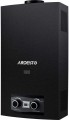 | 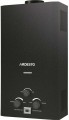 |
|---|---|---|
| Ardesto X2 | Ardesto X1 | |
| Outdated Product | Outdated Product | |
| TOP sellers | ||
| Type | tankless | tankless |
| Energy source | gas | gas |
| Installation | vertical | vertical |
| Tank shape | rectangular | rectangular |
Technical specs | ||
| Power source | energy independent | energy independent |
| Energy efficiency class | A | A |
| Rated heat exchanger power | 20 kW | 20 kW |
| Performance (Δt ~25 °C) | 10 L/min | 10 L/min |
| Efficiency | 86 % | 86 % |
| Water supply | with pressure | with pressure |
| Heating elements | 1 | 1 |
| Heating element type | heat exchanger | heat exchanger |
| Ignition type | batteries | batteries |
| Combustion chamber type | open (atmospheric) | open (atmospheric) |
| Flue diameter | 110 mm | 110 mm |
| Gas consumption | 2.3 m³/h | 2 m³/h |
Features | ||
| Functions | thermostat display | thermostat display |
| Safety systems | overheat protection gas control draft sensor | overheat protection dry heating protection gas control draft sensor |
General specs | ||
| Controls | mechanical | mechanical |
| Controls layout | front | front |
| Pipe connection | bottom | bottom |
| Dimensions (HxWxD) | 59x34x19 cm | 59x34x19 cm |
| Weight | 7.6 kg | 7.6 kg |
| Added to E-Catalog | march 2023 | march 2023 |


Compare Ardesto X2 and X1
You may be interested in
My comparisons
Ardesto TFGBH X1 often compared

Glossary
Gas consumption
It is the amount of gas a device consumes.
Safety systems
The safety of water heaters can be carried out by such functions as overheat protection frost protection, dry heating protection, surge protection, electrical protection (RCD), anti-legionella, gas control and draft sensor. More about them:
— Overheat protection. Water heater safety system that automatically turns off the power supply or gas supply (depending on the type) when the heating element reaches a critical temperature. It avoids overheating and the troubles associated with it, ranging from heater failure to fire.
— Frost protection. Function to prevent freezing of water in the circuits, tank and/or heat exchanger of the water heater. It will be useful when the device is installed in a room with a low temperature and works with long breaks. Frozen water expands, which can damage the device; to avoid this, the frost protection monitors the temperature of the water in the device and turns on the heating when this temperature drops to a critical level.
— Dry heating protection. A safety system that prevents the heater from being switched on without the presence of water in it. Since the heating element does not transfer heat to the water when turned on, it heats up very q...uickly and, in a short time, reaches a high temperature that can lead to damage to the heater and even to a fire. The presence of protection against switching on without water allows you to avoid such unpleasant consequences.
— Voltage surge protection. System for protecting the heater from power surges. Electronically controlled models are usually equipped with such protection (see Control) since it is the control electronics that are most sensitive to problems with the power supply. Note that the capabilities of such systems are noticeably more modest than those of specialized stabilizers or protective systems: the “hardware” of a water heater can smooth out relatively weak power surges, but in case of serious failures, it will most likely simply turn off the device to avoid damage. However, this feature will be useful; except that in very unstable electrical grids, prone to frequent fluctuations, such a heater may require an external stabilizer.
— Electrical protection (RCD). Built directly into the heater, the RCD is a residual current device. Such a device is primarily intended to protect people from electric shock — for example, if the insulation is damaged and electricity leaks into the case or water. When a person comes into contact with this electricity, a so-called leakage current occurs. The RCD reacts to it and almost instantly turns off the power to the boiler, preventing electric shock.
Note that such safety devices are standardly installed directly in switchboards. However, the presence of an RCD in the water heater provides additional security. Naturally, such equipment is found mainly in electric models. — Safety valve. A safety system that prevents a critical increase in water pressure in the heater. Usually, this protection is based on a safety valve that opens when a certain pressure level is reached and drains excess water, avoiding damage to the heater.
— Gas control. Gas heater safety system that automatically shuts off the gas supply in the event of a burner flame failure. It avoids filling the room with gas and possible unpleasant, and even tragic consequences. Resuming the gas supply after the protection is triggered must be done manually.
— Draft sensor. A sensor that monitors the presence of draft in the flue of a gas water heater. This function is especially important for models with open combustion chambers: in the absence of a draft, combustion products will fill the room where the heater is located. And this, in turn, can lead to a deterioration in people's well-being, health problems and even deaths. To avoid such consequences, this sensor, when detecting problems with the draft, turns off the gas supply and issues a warning about the problem. However, such equipment can also be found in models with closed combustion chambers. In them, the draft sensor performs mainly a diagnostic function, allowing you to determine what interferes with the normal operation of the burner.
— Anti-legionella. A function that prevents the growth of pathogenic bacteria in the tank and water heater circuits. Some types of such bacteria can live and multiply in fairly hot water — up to 60 °C. To avoid this, the anti-legionella system monitors the temperature of the water in the tank and periodically raises it to a level of about 65 °C. The specific methods of operation of such systems can be different: for example, some work strictly according to a set schedule (for example, once every two weeks), others turn on additional heating only if for some period (for example, a month) the water has not been heated to sufficiently high temperatures.
— Overheat protection. Water heater safety system that automatically turns off the power supply or gas supply (depending on the type) when the heating element reaches a critical temperature. It avoids overheating and the troubles associated with it, ranging from heater failure to fire.
— Frost protection. Function to prevent freezing of water in the circuits, tank and/or heat exchanger of the water heater. It will be useful when the device is installed in a room with a low temperature and works with long breaks. Frozen water expands, which can damage the device; to avoid this, the frost protection monitors the temperature of the water in the device and turns on the heating when this temperature drops to a critical level.
— Dry heating protection. A safety system that prevents the heater from being switched on without the presence of water in it. Since the heating element does not transfer heat to the water when turned on, it heats up very q...uickly and, in a short time, reaches a high temperature that can lead to damage to the heater and even to a fire. The presence of protection against switching on without water allows you to avoid such unpleasant consequences.
— Voltage surge protection. System for protecting the heater from power surges. Electronically controlled models are usually equipped with such protection (see Control) since it is the control electronics that are most sensitive to problems with the power supply. Note that the capabilities of such systems are noticeably more modest than those of specialized stabilizers or protective systems: the “hardware” of a water heater can smooth out relatively weak power surges, but in case of serious failures, it will most likely simply turn off the device to avoid damage. However, this feature will be useful; except that in very unstable electrical grids, prone to frequent fluctuations, such a heater may require an external stabilizer.
— Electrical protection (RCD). Built directly into the heater, the RCD is a residual current device. Such a device is primarily intended to protect people from electric shock — for example, if the insulation is damaged and electricity leaks into the case or water. When a person comes into contact with this electricity, a so-called leakage current occurs. The RCD reacts to it and almost instantly turns off the power to the boiler, preventing electric shock.
Note that such safety devices are standardly installed directly in switchboards. However, the presence of an RCD in the water heater provides additional security. Naturally, such equipment is found mainly in electric models. — Safety valve. A safety system that prevents a critical increase in water pressure in the heater. Usually, this protection is based on a safety valve that opens when a certain pressure level is reached and drains excess water, avoiding damage to the heater.
— Gas control. Gas heater safety system that automatically shuts off the gas supply in the event of a burner flame failure. It avoids filling the room with gas and possible unpleasant, and even tragic consequences. Resuming the gas supply after the protection is triggered must be done manually.
— Draft sensor. A sensor that monitors the presence of draft in the flue of a gas water heater. This function is especially important for models with open combustion chambers: in the absence of a draft, combustion products will fill the room where the heater is located. And this, in turn, can lead to a deterioration in people's well-being, health problems and even deaths. To avoid such consequences, this sensor, when detecting problems with the draft, turns off the gas supply and issues a warning about the problem. However, such equipment can also be found in models with closed combustion chambers. In them, the draft sensor performs mainly a diagnostic function, allowing you to determine what interferes with the normal operation of the burner.
— Anti-legionella. A function that prevents the growth of pathogenic bacteria in the tank and water heater circuits. Some types of such bacteria can live and multiply in fairly hot water — up to 60 °C. To avoid this, the anti-legionella system monitors the temperature of the water in the tank and periodically raises it to a level of about 65 °C. The specific methods of operation of such systems can be different: for example, some work strictly according to a set schedule (for example, once every two weeks), others turn on additional heating only if for some period (for example, a month) the water has not been heated to sufficiently high temperatures.