
Comparison TouYinger T9A vs TouYinger T9
Add to comparison | 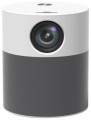 | 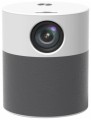 |
|---|---|---|
| TouYinger T9A | TouYinger T9 | |
| Outdated Product | Outdated Product | |
| TOP sellers | ||
| Main function | home | home |
Lamp and image | ||
| Lamp type | LED | LED |
| Service life | 30000 h | 30000 h |
| Brightness | 5500 lm | 5500 lm |
| Brightness ANSI Lumens | 100 lm | 100 lm |
| Static contrast | 2 000:1 | 2 000:1 |
Projection system | ||
| Technology | LCD | LCD |
| Real resolution | 1920x1080 px | 1920x1080 px |
| Max. video resolution | 1920x1080 px | 1920x1080 px |
| Image format support | 4:3, 16:9 | 4:3, 16:9 |
Projecting | ||
| Rear projection |  | |
| Throw distance, min | 0.9 m | 0.9 m |
| Throw distance, max | 3.5 m | 3.5 m |
| Image size | 30 – 120 " | 30 – 120 " |
| Throw ratio | 1.35:1 | 1.35:1 |
| Zoom and focus | manual | manual |
Features | ||
| Bluetooth | v 4.0 | v 4.0 |
| Wi-Fi | Wi-Fi 4 (802.11n) | |
| Miracast | |  |
Hardware | ||
| CPU | MSD53 / ALI212 | |
| Card reader | | |
| USB-A 2.0 | 1 pcs | 1 pcs |
| Number of speakers | 1 | 1 |
| Sound power | 3 W | 3 W |
| Video connectors | composite AV-input | composite AV-input |
| HDMI inputs | 1 | 1 |
| HDMI version | v 1.4 | v 1.4 |
| Audio connectors | 3.5 mm output (mini-Jack) | 3.5 mm output (mini-Jack) |
General | ||
| Noise level (nominal) | 50 dB | 50 dB |
| Power source | mains | mains |
| Power consumption | 60 W | 60 W |
| Size (HxWxD) | 215x180x180 mm | 215x180x180 mm |
| Weight | 1.1 kg | 1.1 kg |
| Color | ||
| Added to E-Catalog | january 2024 | january 2024 |


Compare TouYinger T9A and T9
TouYinger T9A and TouYinger T9 projectors have similar features, making them suitable for home theaters. Both devices use LED lamps with a lifespan of 30,000 hours and provide a brightness of 5500 lm. The resolution for both projectors is 1920x1080 pixels, and the static contrast ratio is 2000:1. Users note good image quality and the ability to project on screen sizes ranging from 30 to 120 inches with a minimum projection distance of 0.9 m. Both projectors support Bluetooth 4.0 and have one HDMI input. However, the TouYinger T9 differs by having an MSD53/ALI212 processor, which may slightly affect performance. Otherwise, both devices have the same dimensions and a noise level of 50 dB, making them virtually identical in use.
You may be interested in
Glossary
Wi-Fi
Wi-Fi standard supported by the projector.
Wi-Fi is known mainly as a way to connect wirelessly to the Internet and local networks. In addition, since relatively recently, this technology has also been used for direct connection between wireless devices. Accordingly, the methods of using Wi-Fi in projectors can also be different. Thus, some models are able to connect to local networks to work with content via DLNA (see above); in others, such a connection is used for control from a computer or other network device; in others, a “remote control” such as a smartphone or tablet can connect directly via Wi-Fi.
As for Wi-Fi versions, the most popular options in modern technology - Wi-Fi 6 (802.11ax), Wi-Fi 5 (802.11ac) - are quite compatible with each other, and the difference between them in this case is not critical. Therefore, you can not pay special attention to these details when choosing.
There are also Wi-Fi ready projectors, which do not have Wi-Fi out of the box, but when connected to the appropriate adapter (purchased separately) are capable of wireless connection.
Wi-Fi is known mainly as a way to connect wirelessly to the Internet and local networks. In addition, since relatively recently, this technology has also been used for direct connection between wireless devices. Accordingly, the methods of using Wi-Fi in projectors can also be different. Thus, some models are able to connect to local networks to work with content via DLNA (see above); in others, such a connection is used for control from a computer or other network device; in others, a “remote control” such as a smartphone or tablet can connect directly via Wi-Fi.
As for Wi-Fi versions, the most popular options in modern technology - Wi-Fi 6 (802.11ax), Wi-Fi 5 (802.11ac) - are quite compatible with each other, and the difference between them in this case is not critical. Therefore, you can not pay special attention to these details when choosing.
There are also Wi-Fi ready projectors, which do not have Wi-Fi out of the box, but when connected to the appropriate adapter (purchased separately) are capable of wireless connection.
Miracast
Miracast technology is designed to transmit streaming video over an IEEE 802.11n wireless channel. This technology is well suited for broadcasting "heavy" high-quality content. Thanks to Miracast, you can display video from a smartphone or a picture of a tablet / laptop screen on the projector in a matter of seconds. Miracast can be considered an optional Wi-Fi Direct application.
CPU
The processor performs the function of converting the input signal; the overall image quality largely depends on its type. The more powerful CPU is used in the projector, the greater the depth of textures the picture will have. Of course, powerful high-performance processors are found mainly in advanced projectors. Inexpensive models of projectors receive a standard CPU with basic capabilities.