
Comparison LG HF65LS vs LG HF65LSR
Add to comparison | 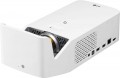 | 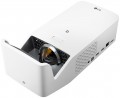 |
|---|---|---|
| LG HF65LS | LG HF65LSR | |
| Outdated Product | Outdated Product | |
| TOP sellers | ||
| Main function | home | home |
| Operating system | Smart TV (proprietary system) | Smart TV (proprietary system) |
Lamp and image | ||
| Lamp type | LED | LED |
| Service life | 30000 h | 30000 h |
| Brightness | 1000 lm | 1000 lm |
| Dynamic contrast | 150 000:1 | 150 000:1 |
Projection system | ||
| Technology | DLP | DLP |
| Size | 0.47" | |
| Real resolution | 1920x1080 px | 1920x1080 px |
| Image format support | 4:3, 16:9 | 4:3, 16:9 |
Projecting | ||
| Rear projection |  | |
| Throw distance, min | 0.11 m | 0.11 m |
| Throw distance, max | 0.38 m | 0.38 m |
| Image size | 60 – 100 " | 60 – 100 " |
| Throw ratio | 0.29:1 | 0.29:1 |
| Zoom and focus | manual | manual |
| Keystone correction (vert), ± | 30 ° | 30 ° |
| Keystone correction (horizontal), ± | 30 ° | 30 ° |
Features | ||
| Features | DLNA support multimedia (air mouse remote) voice control | DLNA support multimedia (air mouse remote) voice control |
| Bluetooth | v 4.0 | v 4.0 |
| Wi-Fi | Wi-Fi 5 (802.11ac) | Wi-Fi 5 (802.11ac) |
| AirPlay | + | + |
| Miracast | | |
Hardware | ||
| USB-A 2.0 | 2 pcs | 2 pcs |
| Number of speakers | 2 | 2 |
| Sound power | 6 W | 6 W |
| HDMI inputs | 2 | 2 |
| Audio connectors | 3.5 mm output (mini-Jack) optical | 3.5 mm output (mini-Jack) optical |
| Service connectors | LAN (RJ-45) | LAN (RJ-45) |
General | ||
| Noise level (nominal) | 34 dB | 30 dB |
| Noise level (energy-saving / quiet) | 21 dB | 21 dB |
| Power source | mains | mains |
| Power consumption | 100 W | 100 W |
| Size (HxWxD) | 128x131x309 mm | 128x131x309 mm |
| Weight | 1.9 kg | 1.9 kg |
| Color | ||
| Added to E-Catalog | march 2023 | june 2019 |


Compare LG HF65LS and HF65LSR
The projectors LG HF65LS and LG HF65LSR have almost identical specifications, making them very similar. Both devices are designed for home theater, use LED lamps with a lifespan of 30,000 hours, and provide a brightness of 1000 lm with a dynamic contrast of 150,000:1. They support a resolution of 1920x1080 pixels and have similar features, including Smart TV based on webOS 4.0, DLNA support, Bluetooth, and Wi-Fi. The main difference lies in the noise level: the HF65LSR operates more quietly (30 dB versus 34 dB for the HF65LS). Both projectors have the same dimensions and weight, making the choice between them primarily a matter of preference for noise level.
You may be interested in
My comparisons
LG HF65LS often compared


LG HF65LSR often compared

Glossary
Size
The size of the panel/chip affects the depth and final quality of the image. The larger the panel/chip, the more light it is able to process, which means the picture will be clearer and more structured. The average projector has a sensor of 0.5-0.7″, advanced projectors use sensors of 1.2-1.5″ and more.
Noise level (nominal)
The maximum noise level generated by the projector.
In most models, the main source of noise is the cooling system — it often uses fans to efficiently remove the heat generated by the lamp. Of course, the lower the noise level, the more convenient the projector is to use, the less inconvenience it causes, and the better the sound accompaniment of the “picture” is heard (if it is provided at all). On the other hand, as the size and power increase, the noise level also inevitably increases, and measures to reduce it significantly affect the cost of the projector.
Portable models are the quietest (see "Main purpose") — most of them do not have active cooling and practically do not make noise, except for control keys clicking and other similar sounds. Therefore, this indicator for such projectors may not be indicated at all. The most "loud" are professional projectors — in them the noise level can reach 50 dB (human speech level at medium volume).
In most models, the main source of noise is the cooling system — it often uses fans to efficiently remove the heat generated by the lamp. Of course, the lower the noise level, the more convenient the projector is to use, the less inconvenience it causes, and the better the sound accompaniment of the “picture” is heard (if it is provided at all). On the other hand, as the size and power increase, the noise level also inevitably increases, and measures to reduce it significantly affect the cost of the projector.
Portable models are the quietest (see "Main purpose") — most of them do not have active cooling and practically do not make noise, except for control keys clicking and other similar sounds. Therefore, this indicator for such projectors may not be indicated at all. The most "loud" are professional projectors — in them the noise level can reach 50 dB (human speech level at medium volume).