
Comparison FrimeCom GP-2000 2000 VA vs Full Energy BBGP-220/20Pro 2000 VA
Add to comparison | 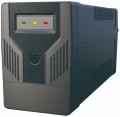 | 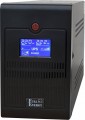 |
|---|---|---|
| FrimeCom GP-2000 2000 VA | Full Energy BBGP-220/20Pro 2000 VA | |
| Outdated Product | Outdated Product | |
| TOP sellers | ||
| Type | back | back |
| Form factor | standard (Tower) | standard (Tower) |
| Switching to battery | 8 ms | 6 ms |
Input | ||
| Input voltage | 1 phase (230V) | 1 phase (230V) |
| Input voltage range | 140 – 290 В | 150 – 260 В |
| Max. current | 1 А | |
| Bypass (direct connection) | in absent | in absent |
Output | ||
| Output voltage | 1 phase (230V) | 1 phase (230V) |
| Peak output power | 2000 VA | 2000 VA |
| Rated output power | 1200 W | 1200 W |
| Output waveform | similar to a sinusoid (approximated) | similar to a sinusoid (approximated) |
| Output frequency | 50 Hz | 50 Hz |
| Redundant sockets | 4 | 4 |
| Socket type | type F (Schuko) | type F (Schuko) |
Battery | ||
| Number of batteries | 2 | 2 |
| 1 battery voltage | 12 В | 12 В |
| Total battery capacity | 9 Ah | 9 Ah |
| Full charge time | 360 min | |
| Max. charging current | 1 А | |
Protection | ||
| Protection | short circuit protection overload protection sound alarm | short circuit protection overload protection sound alarm |
| Fuse | auto | |
General | ||
| Screen |  |  |
| Operating temperature | 0 – 40 °C | |
| Noise level | 40 dB | |
| Dimensions (HxWxD) | 185x130x333 mm | 195x122x360 mm |
| Weight | 13.1 kg | |
| Added to E-Catalog | july 2023 | may 2023 |


Compare FrimeCom GP-2000 and Full Energy BBGP-220/20Pro
You may be interested in
My comparisons
FrimeCom GP-2000 often compared

Full Energy BBGP-220/20Pro often compared

Glossary
Switching to battery
The time required to transfer the load from mains power to battery power. In standby and interactive UPSs (see Type), a short-term power failure occurs at this moment — accordingly, the shorter the time to switch to the battery, the more uniform the power supply is provided by the source during a power failure. Ideally, the switching time for the traditional 50 Hz AC frequency should be less than 5 ms (a quarter of one cycle of the sine wave). With inverter UPSs, the transfer time is, by definition, zero.
Input voltage range
In this case, the input voltage range is implied, in which the UPS is able to supply a stable voltage to the load only due to its own regulators, without switching to the battery. For redundant UPSs (see "Type") this range is quite small, approximately 190 to 260 V; for interactive and especially inverter ones, it is much wider. Some UPS models allow you to manually set the input voltage range.
Max. current
The maximum current drawn by the UPS. In fact, the current reaches its maximum value only when the UPS is operating from the mains with maximum load power and a completely discharged battery. However, when calculating the load on the power grid, this parameter should be taken into account.
Full charge time
The time it takes to fully charge the UPS battery. Note that in this case, this time is calculated according to special rules: not from 0 to 100% of the charge, but from a state in which it is impossible to maintain half the load, up to 90% of the charge. Of course, a full charge will take a little longer. However, this data is closer to practice than the “from 0 to 100%” calculation: the inability to work at half load makes the UPS practically useless, and this condition can be taken as zero, and 90% of the battery is already able to provide a good guarantee in case of a power failure.
Max. charging current
The maximum current in Amperes that charges the UPS battery or battery pack. Frequent charging cycles with high currents reduce the battery's service life. However, charging in this mode will come in handy during regular power outages - it makes sense to use high charging currents when you need to charge the batteries as quickly as possible while the power is on and be fully prepared for the next power outage.
Fuse
Fuses are used to protect the UPS from a critical increase in current strength: at the right time, they open the circuit, preventing unpleasant consequences. Today, these types of fuses are used.
— Melting. At a critical current strength, the conductive element in such a fuse melts and opens the circuit. The fusible protection is disposable, after operation such a fuse must be replaced.
— Automatic. Such a fuse has a sensor that monitors the current strength and opens the contacts at the right time. Its main difference from fusible is reusability: after operation, the circuit can be closed again with literally one press of the button on the fuse.
— Melting. At a critical current strength, the conductive element in such a fuse melts and opens the circuit. The fusible protection is disposable, after operation such a fuse must be replaced.
— Automatic. Such a fuse has a sensor that monitors the current strength and opens the contacts at the right time. Its main difference from fusible is reusability: after operation, the circuit can be closed again with literally one press of the button on the fuse.
Screen
The presence of the UPS own display makes management more convenient. Various operating characteristics can be displayed on the external screen: mains voltage and frequency, operating mode, load level, battery charge, bypass status, etc.
Operating temperature
Ambient temperature range in which the UPS is guaranteed to maintain normal operation.
All modern "uninterruptible" without problems endure the temperatures typical for residential and office premises. Therefore, it makes sense to pay attention to this parameter if the device is planned to be used in more extreme conditions — for example, in an unheated room, or vice versa, in a production workshop with a high air temperature. At the same time, it's ok to take a margin for temperature: this will give a guarantee in case of unforeseen situations, besides, the wider the temperature range, the higher the overall resistance to adverse conditions.
All modern "uninterruptible" without problems endure the temperatures typical for residential and office premises. Therefore, it makes sense to pay attention to this parameter if the device is planned to be used in more extreme conditions — for example, in an unheated room, or vice versa, in a production workshop with a high air temperature. At the same time, it's ok to take a margin for temperature: this will give a guarantee in case of unforeseen situations, besides, the wider the temperature range, the higher the overall resistance to adverse conditions.
Noise level
The maximum noise level produced by the UPS during operation. A noise of 30 dB approximately corresponds to a loud whisper, 40 dB to a conversation at a distance of several metres (it is models up to 40 dB that can be considered quiet UPS), 50 dB is considered the maximum noise level that does not create discomfort. The redundant power supplies are the least noisy, and inverter power supplies are the noisiest (see "Type"). In general, the lower the noise level, the more comfortable the use of the UPS, however, for devices installed in offices where people do not stay permanently (for example, server rooms), this parameter is not critical.