
Comparison Volt Polska Sinus PRO 2000E 2000 VA vs Volt Polska Sinus PRO 1000E 1000 VA
Add to comparison | 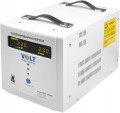 | 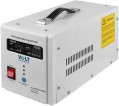 |
|---|---|---|
| Volt Polska Sinus PRO 2000E 2000 VA | Volt Polska Sinus PRO 1000E 1000 VA | |
| Outdated Product | Outdated Product | |
| User reviews | ||
| TOP sellers | ||
| Type | smart | smart |
| Form factor | standard (Tower) | standard (Tower) |
| Switching to battery | 4 ms | 4 ms |
Input | ||
| Input voltage | 1 phase (230V) | 1 phase (230V) |
| Input voltage range | 170 – 270 В | 170 – 270 В |
| Max. current | 20 А | 10 А |
| Bypass (direct connection) | in absent | in absent |
Output | ||
| Output voltage | 1 phase (230V) | 1 phase (230V) |
| Peak output power | 2000 VA | 1000 VA |
| Rated output power | 1250 W | 700 W |
| Output voltage accuracy | 3 % | 1 % |
| Output waveform | pure sine wave (PSW) | pure sine wave (PSW) |
| Redundant sockets | 2 | 2 |
| Socket type | F type, E type | type E (FR) |
Battery | ||
| Battery included | no battery | no battery |
| Min. charging current | 5 А | |
| Max. charging current | 20 А | 10 А |
| Charging current regulation |  |  |
| External battery connection | | |
| External battery voltage | 12 В | 12 В |
Protection | ||
| Protection | short circuit protection overload protection noise filtering sound alarm | short circuit protection overload protection noise filtering sound alarm |
| Fuse | auto | auto |
General | ||
| Screen | | |
| Carrying handle | | |
| Dimensions (HxWxD) | 230x220x335 mm | 170x146x338 mm |
| Weight | 12.5 kg | 6.4 kg |
| Added to E-Catalog | november 2022 | november 2022 |


Compare Volt Polska Sinus PRO 2000E and Sinus PRO 1000E
You may be interested in
My comparisons
Volt Polska Sinus PRO 2000E often compared


Volt Polska Sinus PRO 1000E often compared


Glossary
Max. current
The maximum current drawn by the UPS. In fact, the current reaches its maximum value only when the UPS is operating from the mains with maximum load power and a completely discharged battery. However, when calculating the load on the power grid, this parameter should be taken into account.
Peak output power
The maximum output power supplied by the UPS, in other words, the highest apparent load power allowed for this model.
This indicator is measured in volt-amperes (the general meaning of this unit is the same as that of the watt, and different names are used to separate different types of power). The total power consumption of the load, implied in this case, is the sum of two powers — active and reactive. Active power is actually effective power (it is indicated in watts in the characteristics of electrical appliances). Reactive power is the power wasted by coils and capacitors in AC devices; with numerous coils and/or capacitors, this power can be a fairly significant part of the total energy consumption. Note that for simple tasks, you can use data on effective power (it is often given for UPS — see below); but for accurate electrical calculations it is worth using the full one.
The simplest selection rule for this indicator is: the maximum output power of the UPS in volt-amperes should be at least 1.7 times higher than the total load power in watts. There are also more detailed calculation formulas that take into account the characteristics of different types of load; they can be found in special sources. As for specific values, the most modest modern UPSs give out 700 – 1000 VA, or even less — this is enough to power a PC of average performance; and in the most "heavyweight" models, th...is figure can be 8 – 10 kVA and higher.
This indicator is measured in volt-amperes (the general meaning of this unit is the same as that of the watt, and different names are used to separate different types of power). The total power consumption of the load, implied in this case, is the sum of two powers — active and reactive. Active power is actually effective power (it is indicated in watts in the characteristics of electrical appliances). Reactive power is the power wasted by coils and capacitors in AC devices; with numerous coils and/or capacitors, this power can be a fairly significant part of the total energy consumption. Note that for simple tasks, you can use data on effective power (it is often given for UPS — see below); but for accurate electrical calculations it is worth using the full one.
The simplest selection rule for this indicator is: the maximum output power of the UPS in volt-amperes should be at least 1.7 times higher than the total load power in watts. There are also more detailed calculation formulas that take into account the characteristics of different types of load; they can be found in special sources. As for specific values, the most modest modern UPSs give out 700 – 1000 VA, or even less — this is enough to power a PC of average performance; and in the most "heavyweight" models, th...is figure can be 8 – 10 kVA and higher.
Rated output power
The effective output power of the UPS is, in fact, the maximum active power of the load that can be connected to the device.
Active power is consumed directly for the operation of the device; it is expressed in watts. In addition to it, most AC devices also consume reactive power, which is "wasted" (relatively speaking) is spent by coils and capacitors. Apparent power (denoted in volt-amperes) is precisely the sum of active and reactive power; it is this characteristic that should be used in accurate electrical calculations. See "Maximum output power" for details; here we note that when selecting a UPS for a relatively simple application, it is quite possible to use only effective power. This is at least easier than converting the watts claimed in the characteristics of the connected devices into full power volt-amps.
The most modest modern "uninterruptibles" give out less than 500 watts. 501 – 1000 W can be considered an average value, 1.1 – 2 kW is above average, and in the most powerful models this figure exceeds 2 kW and can reach very impressive values (up to 1000 kW or more in some industrial class UPS).
Active power is consumed directly for the operation of the device; it is expressed in watts. In addition to it, most AC devices also consume reactive power, which is "wasted" (relatively speaking) is spent by coils and capacitors. Apparent power (denoted in volt-amperes) is precisely the sum of active and reactive power; it is this characteristic that should be used in accurate electrical calculations. See "Maximum output power" for details; here we note that when selecting a UPS for a relatively simple application, it is quite possible to use only effective power. This is at least easier than converting the watts claimed in the characteristics of the connected devices into full power volt-amps.
The most modest modern "uninterruptibles" give out less than 500 watts. 501 – 1000 W can be considered an average value, 1.1 – 2 kW is above average, and in the most powerful models this figure exceeds 2 kW and can reach very impressive values (up to 1000 kW or more in some industrial class UPS).
Output voltage accuracy
This parameter characterizes the degree of difference between the AC voltage at the output of the UPS and the perfect voltage, the graph of which has the shape of a regular sinusoid. The perfect voltage is so named because it is the most uniform and creates the least unnecessary load on the connected devices. Thus, the distortion of the output voltage is one of the most important parameters that determine the quality of the power received by the load. A distortion level of 0% means that the UPS produces a perfect sine wave, up to 5% — slight sine wave distortion, up to 18% — strong distortion, from 18% to 40% — a trapezoidal signal, more than 40% — a square wave.
Socket type
A socket for a specific type of plug in the UPS design.
— Type F (Schuko). A traditional European socket with two round holes in the center and grounding contacts in the form of two metal brackets (at the top and bottom of the socket). The term Schuko stuck to this type of socket due to the abbreviation from the German Schutzkontakt - protective contact.
— Type E (French). The French style socket has two round holes and a protruding ground pin just above them in the center. The standard has become widespread in France, Poland and Belgium (along with the traditional type F sockets).
— Type G (British). The plug for such sockets consists of two flat horizontal pins and one flat vertical pin for grounding. The standard is found mainly in the countries of the United Kingdom, Malta, Cyprus, Singapore and Hong Kong.
— Type B (American). American-style sockets are designed for plugs with two flat prongs and a semicircular grounding contact. Type B is widely used in regions with voltage 110 - 127 V - USA, Japan, Saudi Arabia, etc.
— Type F (Schuko). A traditional European socket with two round holes in the center and grounding contacts in the form of two metal brackets (at the top and bottom of the socket). The term Schuko stuck to this type of socket due to the abbreviation from the German Schutzkontakt - protective contact.
— Type E (French). The French style socket has two round holes and a protruding ground pin just above them in the center. The standard has become widespread in France, Poland and Belgium (along with the traditional type F sockets).
— Type G (British). The plug for such sockets consists of two flat horizontal pins and one flat vertical pin for grounding. The standard is found mainly in the countries of the United Kingdom, Malta, Cyprus, Singapore and Hong Kong.
— Type B (American). American-style sockets are designed for plugs with two flat prongs and a semicircular grounding contact. Type B is widely used in regions with voltage 110 - 127 V - USA, Japan, Saudi Arabia, etc.
Min. charging current
The lowest current value in Amperes at which the UPS battery can be effectively charged. Note that charging with low currents is considered more gentle and extends the service life of the battery, but this increases the duration of the charging process. The optimal charge current is about 10% of the battery capacity.
Max. charging current
The maximum current in Amperes that charges the UPS battery or battery pack. Frequent charging cycles with high currents reduce the battery's service life. However, charging in this mode will come in handy during regular power outages - it makes sense to use high charging currents when you need to charge the batteries as quickly as possible while the power is on and be fully prepared for the next power outage.
Charging current regulation
Charging current regulation provides optimal conditions for replenishing energy reserves in the UPS battery cells. In uninterruptible power supply models with a similar function, a charge controller is installed with the ability to change the output current depending on the battery used. And in some UPS systems, automation can not only initially select the optimal current strength, but also regulate it during the charging process depending on the condition of the battery, providing the most gentle charging mode. This increases the efficiency of the charging process, helps extend the battery life and avoid damage.