
Comparison SAMEBIKE 20LVXD30-II vs Maxxter Ruffer
Add to comparison | 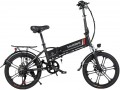 | 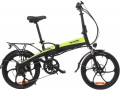 |
|---|---|---|
| SAMEBIKE 20LVXD30-II | Maxxter Ruffer | |
| Compare prices 1 | Outdated Product | |
| TOP sellers | ||
Smartphone holder with USB charging. | ||
| Type | urban | urban |
| Maximum load | 120 kg | 110 kg |
| Foldable design |  | |
Performance specification | ||
| Operating mode | electric drive + hybrid | electric drive + hybrid |
| Range | 80 km | 40 km |
| Motor power | 350 W | 250 W |
| Maximum speed | 35 km/h | 25 km/h |
| Drive | rear | rear |
| Wheel diameter | 20 " | 20 " |
| Depreciation | front | front |
| Front fork | spring-elastomer | spring-elastomer |
| Front brake | disk mechanical | disk mechanical |
| Rear brake | disc mechanical | disc mechanical |
Features | ||
| Speeds | 7 no. | 7 no. |
| Rear derailleur | Shimano | Shimano |
| Shifter type | triggered | triggered |
| Shifter model | Shimano | Shimano |
| Onboard computer | | |
Battery | ||
| Battery capacity | 10.4 Ah | 7.5 Ah |
| Battery capacity | 480 Wh | |
| Supply voltage | 48 В | |
| Full charging time | 6 h | 8 h |
| Battery location | in the frame (hidden) | in the frame (hidden) |
General | ||
| In box | fenders chain guard kickstand carrier signal / ring headlight and parking lights | fenders spring saddle chain guard kickstand carrier signal / ring headlight and parking lights |
| Frame material | aluminum | aluminum |
| Weight | 25 kg | 23 kg |
| Color | ||
| Added to E-Catalog | may 2023 | august 2020 |



Compare SAMEBIKE 20LVXD30-II and Maxxter Ruffer
Price comparison
You may be interested in
SAMEBIKE 20LVXD30-II often compared


Maxxter Ruffer often compared


Glossary
Maximum load
The maximum weight for which the frame, wheels, suspension, brakes, and other components of the electric bike are designed. This usually implies the weight of the rider along with baggage and accessories: for example, a backpack, basket, child seat, or load on the luggage rack. It is not advisable to exceed this limit, as the additional weight reduces maneuverability, increases braking distance, and accelerates wear on the wheels, spokes, hubs, and frame.
Range
Approximate distance that an electric bike can travel on a single battery charge. Specifications usually indicate an estimated value, as the actual range depends on the chosen level of assistance, rider's weight, terrain, speed, temperature, and tire pressure. For example, in economy mode, an e-bike can travel significantly further than when constantly riding with maximum support and speed downhill.
Motor power
The characteristic of the electric motor in watts shows how actively it assists in acceleration, climbing hills, and riding with a load. For leisurely city rides and bike paths, a motor of about 250 W is often sufficient. For suburban routes, hills, and heavier riders, a reserve of 350 – 500 W is more convenient. Values of 750 W and above are more commonly found in powerful fat bikes, cargo, and off-road models. When choosing, it’s important to consider that high power quickly depletes the charge and doesn’t always mean greater speed: real dynamics are also influenced by torque, bicycle weight, battery capacity, and controller settings.
Maximum speed
The maximum speed at which an electric bike can accelerate using the electric motor. For relaxed city rides and bike paths, models with a limit of around 25 km/h are usually sufficient, while options with speeds of approximately 30–35 km/h are found for suburban routes and more dynamic riding. Higher speeds are more common in powerful off-road bikes, fat bikes, and high-speed models.
It is worth considering that the actual speed depends on the motor's power, rider's weight, battery charge, terrain, wind, and controller settings. In some cases, it may also be limited by traffic regulations or firmware.
It is worth considering that the actual speed depends on the motor's power, rider's weight, battery charge, terrain, wind, and controller settings. In some cases, it may also be limited by traffic regulations or firmware.
Battery capacity
Amp-hours indicate the electric charge that an electric bike battery can deliver during operation. This measure helps to roughly estimate the motor's operating time, but by itself does not give an accurate understanding of the range because it does not take the battery voltage into account. For example, batteries with 10 Ah at 36 V and 48 V will have different energy reserves, even though the amp-hour value is the same. Therefore, it is convenient to look at Ah together with voltage and capacity in Wh.
Battery capacity
Watt-hours indicate the total energy reserve of the battery and are more suitable for comparing the range of different electric bicycles. This measure takes into account both the capacity in amp-hours and the system voltage: for example, a 36V battery with 10Ah has about 360Wh, while a 48V battery with 10Ah has about 480Wh. The higher the Wh value, the greater the potential range, but the actual distance still depends on the rider's weight, motor power, terrain, speed, assistance mode, and temperature.
Supply voltage
The operating voltage of the battery system, for which the motor, controller, charger, and electronics of the e-bike are designed. 36V systems are more commonly found in city, recreational, and moderately powerful models, while 48V is typically used where stronger climbing power, dynamic acceleration, or riding with a load is needed. When replacing the battery, the voltage must comply with the bike's standard system; otherwise, the electronics may function incorrectly or fail.
Full charging time
The charging time indicates how long the e-bike battery must be connected to the charger for a full recharge. The greater the battery capacity in Wh or Ah, the longer it typically takes to charge with a standard adapter. For daily urban trips, it's important not only to consider the maximum range but also whether the battery can be fully charged overnight, between trips, or before heading out on a long ride.
In box
— Fenders. Protective shields over the wheels that reduce the splashing of water, dirt, and sand onto clothing, shoes, the frame, and battery compartment. Especially useful for urban commuting, wet asphalt, gravel roads, and daily rides to work, but they add some weight and can rattle if poorly fixed.
— Chain Guard. A protective cover that encloses part of the chain and front sprockets, reducing the risk of soiling or snagging clothing. Particularly suitable for urban e-bikes for rides in regular clothes, though it might hinder quick access to the chain for cleaning, lubrication, or repairs.
— Sprung Saddle. A saddle with a spring suspension unit that cushions shocks and vibrations transferred from the rear wheel to the rider. This option is comfortable for leisurely and city e-bikes, particularly on tiles, cobblestones, and rough asphalt, but for a sports position and active riding, it may be less precise and heavier than a regular saddle.
— Kickstand. A foldable support that allows the e-bike to stand without a wall, rack, or bike parking. Convenient near shops, at home, at the office, or during a short stop en route, but for heavy e-bikes, it's crucial that the kickstand is sturdy and doesn't collapse under the bike's weight with a load.
— Rear Rack....A rear cargo platform for mounting bags, baskets, panniers, a child seat, or carrying small luggage. Useful for city use, delivery, shopping trips, and tourism, but loading can shift the weight backwards and potentially affect balance, especially if the battery is also mounted on the rack.
— Front Rack / Basket. A front platform or basket located at the handlebars (above the front wheel), intended for carrying a bag, backpack, groceries, and small items. This option is convenient for short urban trips, but heavy loads at the front can impact steering and make the bike less stable at low speeds.
— Horn / Bell. An audible signal helps warn pedestrians, other cyclists, and traffic participants of your approach. For city areas, courtyards, bike paths, and parks, it's a practical safety element, although a regular bell does not replace attentiveness and may be difficult to hear in noisy traffic.
— Headlight and Taillights. The front headlight illuminates the road, while the taillights make the e-bike more noticeable to other traffic participants. This is important for evening rides, tunnels, cloudy weather, and riding along roads.
— Bottle Holder. A frame-mounted holder for a water bottle allows you to keep water handy during a ride. It's useful for long routes, training, summer riding, and tourism, but on some e-bikes, space for a bottle may be limited by the battery, low frame, or non-standard geometry.
— Chain Guard. A protective cover that encloses part of the chain and front sprockets, reducing the risk of soiling or snagging clothing. Particularly suitable for urban e-bikes for rides in regular clothes, though it might hinder quick access to the chain for cleaning, lubrication, or repairs.
— Sprung Saddle. A saddle with a spring suspension unit that cushions shocks and vibrations transferred from the rear wheel to the rider. This option is comfortable for leisurely and city e-bikes, particularly on tiles, cobblestones, and rough asphalt, but for a sports position and active riding, it may be less precise and heavier than a regular saddle.
— Kickstand. A foldable support that allows the e-bike to stand without a wall, rack, or bike parking. Convenient near shops, at home, at the office, or during a short stop en route, but for heavy e-bikes, it's crucial that the kickstand is sturdy and doesn't collapse under the bike's weight with a load.
— Rear Rack....A rear cargo platform for mounting bags, baskets, panniers, a child seat, or carrying small luggage. Useful for city use, delivery, shopping trips, and tourism, but loading can shift the weight backwards and potentially affect balance, especially if the battery is also mounted on the rack.
— Front Rack / Basket. A front platform or basket located at the handlebars (above the front wheel), intended for carrying a bag, backpack, groceries, and small items. This option is convenient for short urban trips, but heavy loads at the front can impact steering and make the bike less stable at low speeds.
— Horn / Bell. An audible signal helps warn pedestrians, other cyclists, and traffic participants of your approach. For city areas, courtyards, bike paths, and parks, it's a practical safety element, although a regular bell does not replace attentiveness and may be difficult to hear in noisy traffic.
— Headlight and Taillights. The front headlight illuminates the road, while the taillights make the e-bike more noticeable to other traffic participants. This is important for evening rides, tunnels, cloudy weather, and riding along roads.
— Bottle Holder. A frame-mounted holder for a water bottle allows you to keep water handy during a ride. It's useful for long routes, training, summer riding, and tourism, but on some e-bikes, space for a bottle may be limited by the battery, low frame, or non-standard geometry.