
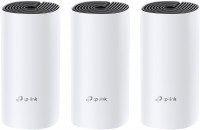
TP-LINK Deco M3 (2-pack)
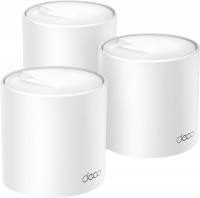
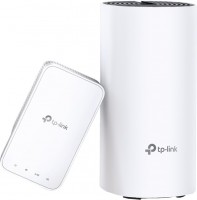 | Outdated Product AC1200 class dual-band wireless MESH system designed to organize a seamless Wi-Fi 5 network in residential or office premises up to 223 m². It is a set of one Deco M4R wireless router and one Deco M3W amplifier. It is positioned as a product of the middle price category, which will help to create a stable and high-speed Wi-Fi coverage in multi-room apartments, one / two-story houses and offices. The service area can be expanded by adding new amplifier units compatible with TP-Link OneMesh technology. Unlike wireless networks based on conventional routers / repeaters, the TP-LINK Deco M3 (2-pack) MESH system provides absolutely smooth and invisible intra-system roaming for the user. It is also worth noting the impressive data transfer rate (theoretical connection speed is 300/867 Mbps in th...e 2.4/5 GHz bands). The user can perform all operations for configuring such a system on his own, using an application that runs on any current smartphone models (Android and iOS). E-Catalog uses affiliate links compensated by our partners. |


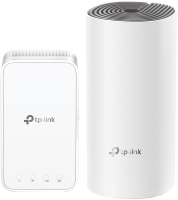
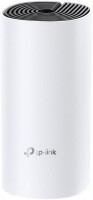
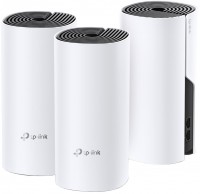
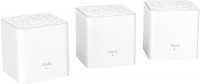
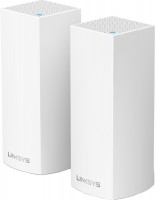
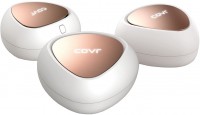
AC1200 class dual-band wireless MESH system designed to organize a seamless Wi-Fi 5 network in residential or office premises up to 223 m². It is a set of one Deco M4R wireless router and one Deco M3W amplifier. It is positioned as a product of the middle price category, which will help to create a stable and high-speed Wi-Fi coverage in multi-room apartments, one / two-story houses and offices.
The service area can be expanded by adding new amplifier units compatible with TP-Link OneMesh technology. Unlike wireless networks based on conventional routers / repeaters, the TP-LINK Deco M3 (2-pack) MESH system provides absolutely smooth and invisible intra-system roaming for the user. It is also worth noting the impressive data transfer rate (theoretical connection speed is 300/867 Mbps in the 2.4/5 GHz bands). The user can perform all operations for configuring such a system on his own, using an application that runs on any current smartphone models (Android and iOS).
|
| ||||||||||||||||||||||||||||||||||||||||||||||||||||||||||||||||||||||||||||||||


Always clarify the specifications and configuration of the product with the online store manager before purchasing.
Catalog TP-LINK 2026 - new arrivals, bestsellers, and the most relevant models TP-LINK.
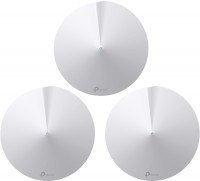

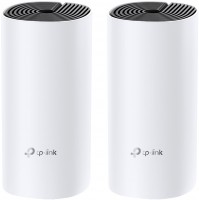


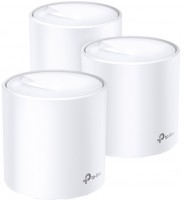
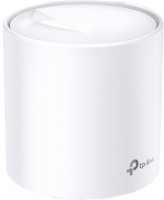

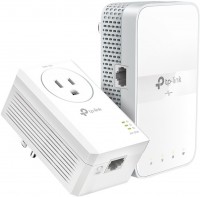
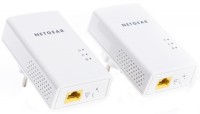
Appearance, ease of setup, speed of operation The app and the absence of a LAN port on the second unit  Konstantin Katarskiy: use TP-LINK Deco M3 (2-pack) less than month Konstantin Katarskiy: use TP-LINK Deco M3 (2-pack) less than month |


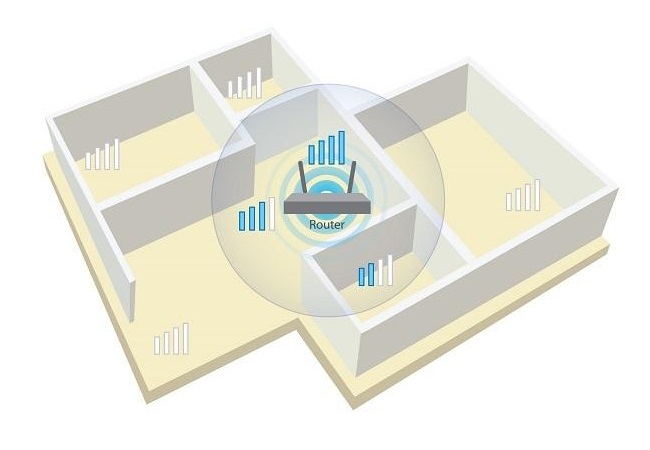
TP-LINK Deco M3 is a key network infrastructure link for deploying wireless Internet in complex multi-room apartments, two-story houses and other spacious residential areas with a total area of up to 223 m².
Seamless connection
The MESH system is designed to provide seamless reconnection of wireless network clients when moving around the perimeter of the serviced "square". The stylish M4R node with two gigabit WAN/LAN ports is assigned to the role of the leading module in it. The auxiliary unit of the system is marked with the M3W mark. Thanks to Deco Mesh technology, the modules create a single Wi-Fi network with a single name. The service area is to be expanded by adding new amplifier units compatible with the above technology.
Convenient management
The system is controlled through the Deco mobile application. Its setup is described step by step, so everyone can understand the settings of TP-LINK Deco M3. The device also recognizes voice commands through the Amazon Alexa virtual apprentice. But the model does not provide the usual web interface for point network configuration. The MESH system distributes the Internet in the 2.4 and 5 GHz bands, during which the maximum throughput is 300/867 Mbps, respectively.
Great choice
In a network with TP-LINK Deco M3, up to 100 client devices can be connected at the same time. The parental control function helps to monitor the activity of children on the Internet. The aesthetic component of the kit is improved by built-in antennas. As a result, the TP-LINK MESH system will be an excellent choice for creating a seamless coating in medium and large residential areas.
Now, about the speed: near the main unit, the coverage is excellent, with a stable signal on both 2.4 and 5 GHz. Speedtest shows 90+ Mbps. With Tenda, the second unit was connected to a computer and was delivering really low speeds, even though the distance between the units was less than 10 meters, with just one wall in between. It seemed like the units were connecting via 2.4 GHz, leading me to search for a replacement. Because of my oversight, I had to connect the computer through an old router, which in turn was connected to the second unit. Even in this setup, the speed was 4-5 times higher than with Tenda.
However, the Tenda app is better: it has an intuitive interface and more functionality. In the Deco app, connected devices are displayed incorrectly, with some not even visible, although they are connected and working.