
PowerVision PowerEgg
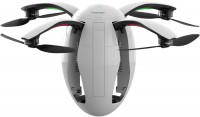 | Outdated Product Folding two-kilogram quadcopter with an original futuristic design and a high-tech control system equipped with satellite navigation modules. Equipped with a 14-megapixel camera capable of taking high-quality photos with a resolution of 4254x3264 and shooting video in the following formats: UltraHD (3840x2160) at 30 fps, FullHD (1920x1080) up to 120 fps or HD (1280x720) up to 240 fps. Videos are saved in MOV format with MPEG-4 AVC/H.264 compression on a UHS-1 compatible microSD card. The camera has a 3-axis gimbal stabilization and provides smooth and clear images with good colour reproduction. The PowerVision PowerEgg quadcopter is equipped with two remote controls — the standard and the original PowerEgg Maestro smart remote control, which recognizes gestures and allows you to start or l...and with just one touch. A powerful lithium-polymer battery allows the drone to stay in the air for up to 23 minutes and accelerate up to 46 km/h. The control system, which receives data from a variety of gyroscopic, optical, barometric and ultrasonic sensors, independently stabilizes the device in windy weather, detects obstacles in advance and automatically flies around them. There are many flight modes, including tracking mode, circular flight of a given point, flight along a route with coordinates marked in advance. The drone can stream live video from the camera directly to the screen of a smartphone or tablet running Android / iOS, and unlike other models, a long distance to the device will not become a hindrance. E-Catalog uses affiliate links compensated by our partners. |






Folding two-kilogram quadcopter with an original futuristic design and a high-tech control system equipped with satellite navigation modules. Equipped with a 14-megapixel camera capable of taking high-quality photos with a resolution of 4254x3264 and shooting video in the following formats: UltraHD (3840x2160) at 30 fps, FullHD (1920x1080) up to 120 fps or HD (1280x720) up to 240 fps.
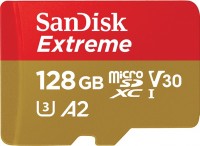
Videos are saved in MOV format with MPEG-4 AVC/H.264 compression on a UHS-1 compatible microSD card. The camera has a 3-axis gimbal stabilization and provides smooth and clear images with good colour reproduction. The PowerVision PowerEgg quadcopter is equipped with two remote controls — the standard and the original PowerEgg Maestro smart remote control, which recognizes gestures and allows you to start or land with just one touch.
A powerful lithium-polymer battery allows the drone to stay in the air for up to 23 minutes and accelerate up to 46 km/h. The control system, which receives data from a variety of gyroscopic, optical, barometric and ultrasonic sensors, independently stabilizes the device in windy weather, detects obstacles in advance and automatically flies around them. There are many flight modes, including tracking mode, circular flight of a given point, flight along a route with coordinates marked in advance. The drone can stream live video from the camera directly to the screen of a smartphone or tablet running Android / iOS, and unlike other models, a long distance to the device will not become a hindrance.
|
| ||||||||||||||||||||||||||||||||||||||||||||||||||||||||||||||||||||||||||||||||||||||||||||||||||||||||||||


Always clarify the specifications and configuration of the product with the online store manager before purchasing.
Catalog PowerVision 2026 - new arrivals, bestsellers, and the most relevant models PowerVision.
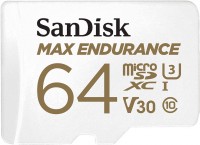
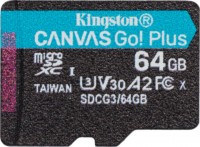
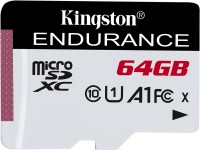
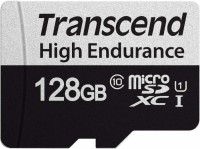
A very high-quality device, and as the owner of the Mavic Air, I can say that there are many advantages over the Mavic Air. First of all, I would like to note the complete absence of any restrictions on video and photo settings. The Mavic has a manual mode, but everything is very limited there, there are no all modes and settings. the same shutter speed iso and so on. Secondly, this egg drone (it’s hard to describe it in another way) has two rollers for turning the suspension, TWO! Even the Mavik 2 Pro does not have this!) Of course, the Mavik is much lighter and more compact, but TWO wheels are exactly what I would like to get in the Mavik. Another feature is the gyroscopic pointer, which repeats the movement of the hand and the drone flies in the direction of this movement. I got the hang of it, and with the help of this thing, you can shoot cinematic smooth pictures the way I want. There is a capacious battery here, I don’t know what capacity, but it lasts more than 20 minutes of flight. I cannot say that this drone is fast, no, it is rather slow. But it holds the wind well. The gusty wind practically does not shake it. Perhaps due to the oval shape. The software here, of course, is simpler than that of the Mavik (in terms of ergonomics and additional settings for the drone itself). Yes, the implementation of photo shooting and video here is cooler than that of mavics, but the drone settings, modes and sensors are not very good. By the way, there are no anti-collision sensors. Of course, sometimes they are not enough. In general, I bought it as an experiment, and I did not lose, since I already have a compact and fast drone, now I have a drone for smooth filming of cinematic shots. An excellent remote control for drone control + a special pointer which I shoot almost everything. The drone flies for a long time on one charge. Everything can be charged at the same time with a single charge. Landing legs effectively leave, which delights children)) Excellent video mode with a bunch of shooting settings. There are the same modes as the Mavic, but the drone is cheaper. Doesn't resist wind well. The flight range in the city I got 2 km, which is a lot. On the screen you can see the battery charge not only of the drone, but also of the remote control, station, pointer. You can’t catch with your hands how I catch mavics, it’s impossible because he won’t sit down + if the remote control (half a meter) is nearby, he refuses to sit down (for safety reasons). For me, this is a minus, as I shoot where people walk or mud, or mountains, etc., and it is very inconvenient to land on the ground. Its dimensions are large + carry it in a special case. and the case is like the floor of me) use PowerVision PowerEgg few months |
Nothing reveals the true nature of the "dinosaur" egg from PowerVision until the moment it is turned on. Literally at the touch of a button, four legs of the chassis automatically move out of the egg-shaped body of the device and the features of the aircraft begin to be seen in the device. Finally, the belonging of the PowerVision PowerEgg to the drone squad becomes clear when manually installing a quartet of axes with folding propellers.
Nothing extra
The eggcopter surfs the heavens at a maximum speed of 46 km/h at a distance of up to 5 km from the pilot, simultaneously recording video at a resolution of 3840x2160 pixels (30 fps). The 3-axis stabilization system is responsible for the smoothness of the footage. So that nothing superfluous gets into the frame, after takeoff the copter automatically removes mechanization, leaning the chassis close to the body (as it is implemented in the transport position).
Useful skills
Useful skills of a quadcopter are tracking an object, moving along a route, and flying in orbit at a given speed and altitude. Also, the trajectory of a drone hovering in the clouds can be controlled using an additional Maestro pointer remote control, which serves as a useful appendage to the familiar joystick with sticks. By the way, a platform for installing a smartphone or tablet is attached to the latter, on the screen of which all information about the flight is displayed and the picture from the camera is transmitted.
original design
A single charge of a 6400 mAh battery lasts approximately 23 minutes. drone in the air. And although PowerVision PowerEgg fits the role of a serious pro-tool with a stretch, thanks to the original appearance and remarkable abilities in video shooting, the eggcopter will still find its audience, because a device of such an atypical form factor is interesting in itself.
- Matrix — CMOS 1/2.3"
- Aperture — f / 2.8
- Camera light sensitivity (ISO) — 100-1600 (video), 100-1600 (photo)
- Exposure — 8s -1/8000s
- Continuous shooting — 3, 5 or 10 fps
- Time-lapse: 1/30 1, 2, 5, 10, 20, 30, 60 s