
Thermex IF-100 V
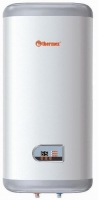 | Outdated Product Type: storage; Energy source: mains; Tank volume (L): 100; Power source: 230 V; Power consumption (W): 2000; Magnesium anode; Heating elements: 1; wet heater; thermostat; overheat protection; safety valve; Pipe connection: bottom; Dimensions (cm): 124.5x49.3x27; E-Catalog uses affiliate links compensated by our partners. |


Thermex IF-100 V | ||||||||||||||||||||||||||||||||||||||||||||||||||||||||||
|
| |||||||||||||||||||||||||||||||||||||||||||||||||||||||||


The information in the model description is for reference purposes.
Always clarify the specifications and configuration of the product with the online store manager before purchasing.
Catalog Thermex 2026 - new arrivals, bestsellers, and the most relevant models Thermex.
Always clarify the specifications and configuration of the product with the online store manager before purchasing.
Catalog Thermex 2026 - new arrivals, bestsellers, and the most relevant models Thermex.
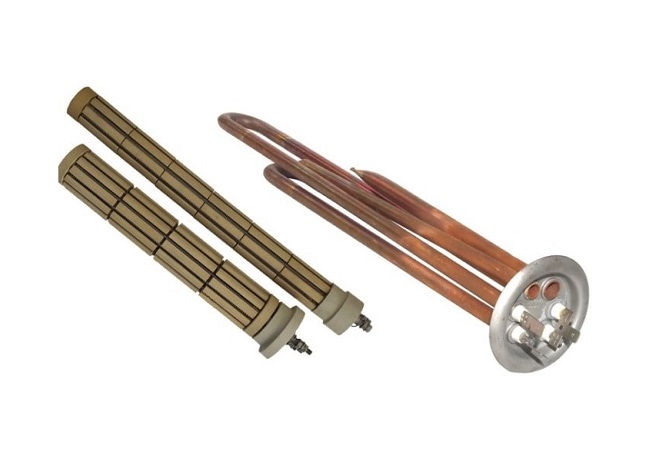
Which is better: wet or dry heating element in a water heater?Learning the design features, pros and cons of "wet" and "dry" heating elements in water heaters
Detailed FAQ on storage water heatersWe answer the most common questions regarding the installation and operation of storage water heaters
Model overview based on user reviews
The Thermex IF boiler series, including models like the IF-50 V and IF-80 V, receives mixed reviews from users. Many appreciate its compact design and quick heating capabilities, making it suitable for small spaces. However, there are significant concerns about its reliability and durability. Common issues include frequent leaks, poor insulation, and the need for regular maintenance, such as replacing heating elements and anodes. Some users report problems with the electronics and temperature control, leading to overheating or underheating. Warranty service is often criticized for being unhelpful, with some users experiencing difficulties in getting replacements or repairs. Despite its attractive appearance, many users advise caution due to the potential for high maintenance costs and the risk of component failure.
Pros
Cons
21 9 10 5 |
To avoid unnecessary hemorrhoids, I initially got rid of 700 W of heating element (absolutely not needed). Every six months I drain the water, remove, disassemble and wash the tank with descaling the heating element. Pollution depends entirely on the quality of the water. If necessary, change the anode. Hissing is a clear sign that it is time to flush the tank and clean the heating element (I don’t allow this before, strictly - once every six months). For 10 years of operation, I changed all the resistances on the power board at once (something went wrong there, I don’t remember already). How many heaters have you changed? Didn't count. But with my rule to arrange a mandatory cleaning every six months, the heating element can easily withstand more than a year (if the heating element is of high quality). I will say right away that the boiler does not work for me all the time, but I turn it on up to 40 gr. somewhere in a day (more I do not need). Keeps warm for my purposes. I’m thinking about buying a spare power board in advance, because you won’t find it quickly, but there’s no way without hot water. I noticed that over time I began to heat the water more than the set temperature. This is of course a serious disadvantage. Why is that? Haven't figured it out yet. The boiler has been in operation for over 10 years. Inconvenient disassembly. Fulfilling the full schedule of work, starting with draining water, removing, disassembling (etc.) and before returning it to its place, I spend half a day - a lot. But once every six months, you can devote time to this. |

As soon as the power goes out in the village (for seconds), the heaters turn on but do not switch to the heating mode. I have to go down to the basement and press the ON button. During this time, the water in the tanks starts to cool down and we often find out about the problem only when there's no hot water! The service center replied as follows "electronic models work only in this order to protect the heating elements from turning on without water". So it turns out it's not a flaw, but "protection". From the service center's reply it seems like there's no basic protection against turning on without water! How is that possible? A water presence sensor is very cheap and easy to implement. I regret a lot that I paid 30,000 for this junk which is not adapted to Russian conditions. Compact, good design Forgets all settings if the light blinks  Andrey: use Thermex IF-100 V month or more i recommend it don't buy Andrey: use Thermex IF-100 V month or more i recommend it don't buy |
compact convenient currently, it "consumes" too much electricity in standby mode. The quality of the insulation is questionable, as the room where it is installed has become warmer. viktor: use Thermex IF-50 V few months |
3 out of 47 user review(s) shown
10 more user review(s)
Video reviews
Installation Thermex IF Comfort boiler
16 December 202120 913 view

THERMEX ID 100 V (pro) Wi-Fi
6 February 20212 302 view
Additional features water heater Thermex IF-100 V:
- Thermometer
- Fast heating
- Bottom eyeliner
| THERMEX | IF 30V | IF 50V | IF 80V | IF 100V |
| Power, W | 2000 | 2000 | 2000 | 2000 |
| Tank volume, L | thirty | fifty | 80 | 100 |
| Heating time, min | fifty | 80 | 130 | 160 |
| Device dimensions (HxWxD), mm | 612x436x235 | 887x436x235 | 1025x493x270 | 1245x493x270 |
We recommend

tankless, gas, heat exchanger, from overheating, dry heating protection, gas control, draft sensor, turbo, 38 - 58 kW, 76.5x47x29 cm, vertical
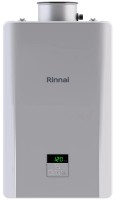
tankless, gas, heat exchanger, from overheating, dry heating protection, gas control, draft sensor, turbo, 41 - 58 kW, 69.3x35.7x27.4 cm, vertical
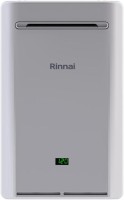
tankless, gas, heat exchanger, from overheating, dry heating protection, gas control, draft sensor, turbo, 41 - 58 kW, 62.6x35.7x27.4 cm, vertical

tankless, gas, heat exchanger, from overheating, dry heating protection, gas control, draft sensor, turbo, 58 kW, 67x47x29 cm, vertical